
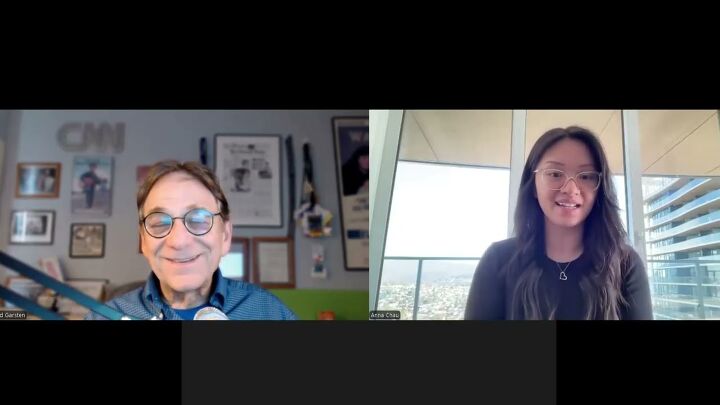

Lots of great guests and some snarky monologues from host Ed Garsten. Here’s a recap of 2025 highlights from season 3 of Tales From the Beat, the podcast that looks at news and PR from both sides of the scrimmage line.
Featured guests in order:
- Craig Cole
- Dan Roth
- Brian Kramer
- Greg Migliore
- Elliot Katz
- Randall McAdory
- Sam Locricchio
- Julian Bond
- Robyn Malone
- Anna Tran
- Kelly Law
- Kim Jennett
- David Wilder
TTAC Creator Ed Garsten hosts ” Tales from the Beat,” a podcast about the automotive and media worlds. A veteran reporter and public relations operative, Garsten worked for CNN, The Associated Press, The Detroit News, Chrysler’s PR department and Franco Public Relations. He is currently a senior contributor for Forbes.
The TTAC Creators Series tells stories and amplifies creators from all corners of the car world, including culture, dealerships, collections, modified builds and more.
A transcript, cleaned up via AI and edited by a staffer, is below.
[Image: YouTube Screenshot]
Become a TTAC insider. Get the latest news, features, TTAC takes, and everything else that gets to the truth about cars first by subscribing to our newsletter.
Transcript:
Hi everyone, I’m Ed Garston, and welcome to the Tales from the Beat 2025 recap.
Over three seasons and roughly 131 episodes, we’ve stayed true to our mission: looking at news and PR from both sides of the scrimmage line. So buckle in for highlights from our 2025 Tales from the Beat interviews, along with a few of my monologues. We covered everything from auto shows and the EV narrative to an agency’s audacious money-back guarantee, and even an AI startup whose founder claims it can help prevent serious editorial errors.
We talked about building relationships with reporters, and I included a clip from my monologue on editorial “string theory,” featuring actual pieces of string.
Let’s kick things off with TopSpeed.com editor Craig Cole from episode 107, where we talked about complaints that auto shows have lost their glitz and purpose.
I asked Craig whether that criticism was just crusty old automotive journalists longing for the past.
He said he thinks there’s too much complaining. Ultimately, reporters are there to cover the cars. Personally, he prefers cars on carpet with no fancy displays because it’s easier to navigate the show floor. Automakers love adding elevation changes and glass dividers to booths, which can be a hazard when you’re carrying camera gear. An open field of cars is simply easier to work with.
Dan Roth has been around the block as an auto journalist and a PR professional. In episode 108, we talked about several issues, including how the EV story has been reported.
He noted that automakers sometimes seem less than confident in how they position EVs. Instead of focusing on the technology being fuel-agnostic, the conversation often leans entirely toward climate messaging. EVs don’t care where electricity comes from—coal, solar, wind, or even a generator—as long as electricity flows, the batteries charge.
I got to know Brian Kramer when he was my PR contact at CarGurus. This year, he launched a weekly newsletter called This Week in PR Takes. He talked about the need for a mindset shift in PR.
He said it’s not a reporter’s job to respond to pitches, and PR professionals aren’t entitled to a reply. The responsibility is on PR to present a compelling reason for someone to engage.
Greg Migliore, editorial director at VerticalScope and a longtime auto journalist, joined me to discuss burnout around the import tariff story.
He described it as a constant back-and-forth. On the AutoGuide side, newsletters would go out with tariff updates, only to require headline rewrites 20 minutes later when the policy flipped again. Ultimately, he believes tariffs are bad for consumers, who will likely pay more as automakers pass along costs. He called it a reactionary and outdated economic approach.
AI was a major theme in 2025. In episode 116, Elliot Katz, founder of Mixus.ai, explained how AI tools with human verification could help reporters avoid publishing errors.
He described a system where AI-generated research must be reviewed and verified by editors or colleagues before publication, ensuring accuracy instead of blindly trusting outputs.
I first met Randall McAdory when we both worked at Chrysler—me in corporate PR and him in marketing. Today, he publishes thoughtful commentary in the TASMaster newsletter. In episode 117, he discussed fairness in EV coverage.
He argued that Detroit-based media has historically been more favorable toward legacy automakers and internal combustion engines, while non-Detroit media has leaned more positively toward EVs, Tesla, and Elon Musk. That said, he believes coverage of Chinese automakers and their global growth—along with the role of subsidies—has been generally fair and eye-opening for readers.
In episode 120, I shared one of my monologues titled String Theory. Using literal pieces of string, I explained how reporters build stories from fragments—interviews, presentations, and infographics. Individually, each piece is weak, but when tied together around a common theme, they form a strong narrative.
Yes, I was a Boy Scout many years ago.
In episode 122, Sam McCreeio of Near Perfect Media weighed in on how a company used humor to manage fallout from a viral kiss-cam scandal involving its CEO and HR chief.
He noted that humor can be a slippery slope, but in this case, the company recognized the moment, leaned into it carefully, and used it to increase awareness without escalating the situation.
Julian Bond, a social media consultant, joined me in episode 124 to discuss dealing with AI-driven search results.
He talked about the importance of establishing a “source of truth” and, at times, playing along with AI by strategically using related keywords and hashtags—while ensuring accurate information remains the foundation.
In episode 125, Robin Malone, CEO of RJ Communications, discussed her trademarked process called “finding your story space.”
She explained that story space goes beyond white space or share of voice. It’s about how a brand shows up in the broader conversation and identifying where it can authentically and uniquely contribute.
Episode 126 introduced Anna Tran, founder of Level Up with Anna PR. She spoke about purpose-driven PR and building trust with reporters.
She emphasized asking the right questions, understanding what journalists actually need, and building relationships without immediately asking for coverage.
Kelly Law, an account manager at The Brand Amp and one of my favorite PR people, joined me in episode 128. She explained how she connects with reporters by being mindful of what they cover, avoiding spam, and framing smaller updates as “keeping you in the loop.” When something is truly newsworthy, she reaches out directly so reporters can plan ahead—trust that pays off over time.
In episode 129, Kim Janette explained how a single news release can spark an entire news cycle.
She described recognizing early signals around data centers in space, aligning with a partner company, and placing the story with the right journalist. When Elon Musk responded publicly, the story went viral, prompting reactions from Google, Amazon, and OpenAI—and the cycle continued for weeks.
In episode 130, my monologue Competitive Paranoia recalled an assignment for CNN, where I was told to ask why no one was water skiing on a Tennessee waterway—despite it being December.
After warning the Army Corps official about the question, I asked it anyway. His blunt response—about how cold it was—didn’t make air in its original form, but the point landed.
Our final clip comes from episode 131 with David Wilder, CEO of Trust Point Exposure, a PR firm offering a money-back guarantee on tier-one media placement and AI search visibility.
David explained that AI-driven search prioritizes clear answers first, followed by supporting details and references. Success now requires a more direct, human approach to storytelling—and the results, he says, have been significant.
That wraps up our Tales from the Beat 2025 recap—our best year yet since I started the podcast about three and a half years ago.
To everyone who’s listened or watched, thank you sincerely for your support. Please spread the word, comment, and subscribe. If you’d like to be a guest or suggest one, you can reach me directly at talesfromthebeatgarston@gmail.com.
I’m Ed Garston, and I’ll be back soon with more tales. Take care.
