
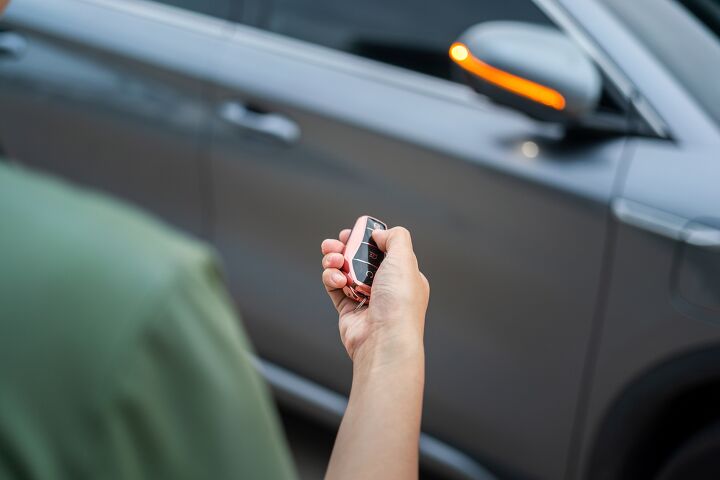
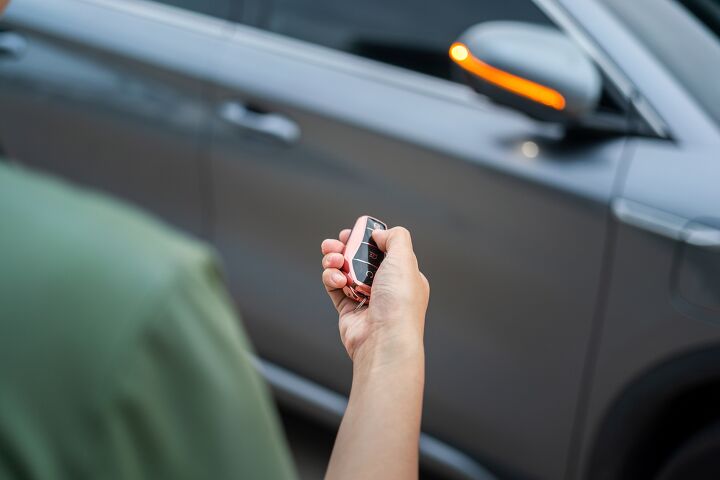
As someone who spent the majority of their life in colder climates with no-nonsense winters, remote starters were the one aftermarket component fitted to most of the vehicles I’ve owned. While my obsessive nature often meant they saw limited use, they were often nice to have. But I’ve sworn off their modern equivalents until they become more customer friendly.
At the turn of the millennium, basic remote-start systems rarely retailed for more than a few hundred bucks and could be installed at home by individuals with a fair bit of wiring experience. As the years rolled on, units became more complicated and sometimes required professional installation. This was especially true as a majority of dealerships began offering them as optional equipment.
Any parasitic draw from the battery was often not enough to make a meaningful difference, assuming you didn’t botch the install procedure, even on vehicles that spent most of their days parked. The only real drawback was the occasional tricky restart after disconnecting and then reconnecting the vehicle’s power source — typically done as a safety precaution for those working on the automobile. Timers similarly ensured that the vehicle was not left running past the point of achieving nominal operating temperatures.
As the years rolled on, I started noticing some units becoming more complex and persnickety. By 2010, check engine lights or low fuel levels would often result in the remote starter temporarily going dormant. But these were hardly tragedies and likely saved plenty of owners some trouble.
With vehicle systems now more integrated than ever before, every modern automaker still offers remote start as an option. However, these are no longer standalone units that need to be installed. The hardware is typically already fitted to the vehicle from the factory and now requires owners to opt into some type of connectivity package.
The upside to this is that drivers can remotely activate their cars from just about anywhere now. Older radio dongles/fobs needed to be within a couple hundred yards — or meters, if you’re not American — of the vehicle relay to function. But the newer units just need the automobile to be connected to wi-fi, with the distance relative to the activation point being largely irrelevant.
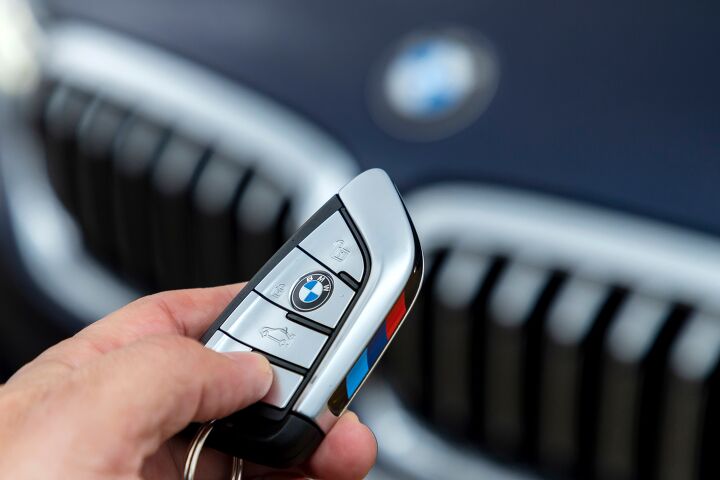
While many key fobs still incorporate a dedicated button for factory remote starters, automakers have been pivoting toward smartphone apps. As a bonus, the applications often provide real-time vehicle information (telematics) to the owner. Customers can likewise set up their desired defrost or A/C settings remotely.
However, these newer systems also come with some rather serious drawbacks.
Connectivity features don’t always work when a vehicle is located somewhere exceedingly remote. The same is often true when a car is parked in an underground garage and several feet of concrete are blocking the signal. The issue is actually so prevalent that it inspired an entire episode of It’s Always Sunny In Philadelphia. In 2022, Writer/cast member Glenn Howerton experienced what has to be an absolute worst-case scenario where a lack of connectivity resulted in his Tesla becoming completely undrivable, forcing a him to abandon it for several weeks.
Then, there is the now-rampant issue of “Goods as a Service” (subscriptions) and digital privacy. Subscriptions are the scam du jour for all businesses at present and automakers have taken notice. Despite the whole world throwing a fit when BMW initially tied heated seats to monthly subscriptions, only to sneak them back in, remote starters somehow managed to avoid public protest.
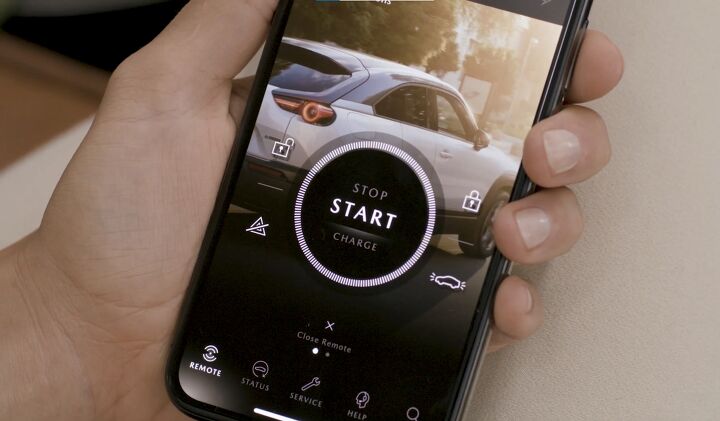
Our household’s newest vehicle happens to be a Mazda and the company made it crystal clear upon taking ownership that installing any aftermarket starters would void the warranty (this actually depends on your contract and whether the company can “prove” it could damage the vehicle). But the dealership had a solution: we could simply use the MyMazda app to activate the car from our phones.
This was never going to happen.
Like me, my better half is concerned with maintaining a certain level of digital privacy as a matter of principle. Not only were we not going to make use of the MyMazda app, which the sales representative was desperate to have us set up at the dealership, we weren’t even going to activate the default connected services on the vehicle.
While this temporarily barred us from having remote start, it also kept us from having to pay ten dollars a month ($120 per year) once the connected services “free trial” ran out. It similarly limited some of the nefarious data gathering that has become normalized within the industry.
That’s not a jab at Mazda. The above is now commonplace across the industry, with Mazda formerly being one of the last remaining holdouts. A majority of automakers now offer some form of subscription for app-based remote starters. A few even charge installation fees on top of that. Even among those that still include a dedicated button the key fob, the unit doesn’t operate on direct radio frequencies anymore. It’s almost assuredly tied to the internet and will likewise utilize some kind of app.
Granted, while loads of drivers are getting hip to corporate information harvesting, data concerns aren’t something everyone cares about. But paying indefinitely for features already equipped to the vehicle probably are.
Older standalone units required customers to pay once for a feature that should last roughly as long as the vehicle. Meanwhile, subscription models will ultimately have you shelling out far more money over time. Owners aspiring to keep their vehicle on the road for over a decade can expect to pay at least $1,000 via subscription services. Keep in mind that’s on equipment that is typically already installed to the vehicle and had presumably been incorporated to the original MSRP.
You’re undoubtedly thinking that you can just buy an aftermarket remote starter once the warranty expires and you certainly can. However, modern controller area network (CAN) bus systems are so integrated that the old ways are no longer an option. There’s also some additional risk as incorrect wiring now has a higher likelihood of frying your entire electrical system, which is now more costly to replace than ever before thanks to its integrated design.
But aftermarket companies are constantly finding workarounds as automakers try to put up new barriers. Once a vehicle has been on the market for a while, businesses will eventually be able to determine the best code to feed into the ECU. However, connectivity makes this tricky. We’ve seen instances where over-the-air updates will totally negate aftermarket code. Other times the new code causes conflicts that toss the vehicle into limp mode or disable it entirely.
Thankfully, modern data interface modules are improving all the time and making it easier for owners to pay to have their way with the existing software by simply plugging into a t-harness. Automakers don’t like this, since they’re trying their hardest to gatekeep already installed systems using subscriptions while leverage data harvesting. But history has shown that this is often a losing battle. With a little research, you can probably find a reputable outlet willing to do the necessary work on any model that’s more than a few years old.
And that work will become essential as automakers stop supporting older vehicles. Once companies decide that supporting older connected models is no longer financially viable, owners are going to see just about every feature tied to the internet go permanently dark. There will be no more remote starting, vehicle location services, virtual voice assistants, or updated navigation.
There won’t even be an option to pay for the subscription fee anymore. The only way to get some of that back will be to jack into your vehicle and restore those features or install entirely new aftermarket ECUs.
[Images: Nattawit Khomsanit/Shutterstock; Mazda; emirhankaramuk/Shutterstock]
Become a TTAC insider. Get the latest news, features, TTAC takes, and everything else that gets to the truth about cars first by subscribing to our newsletter.
