
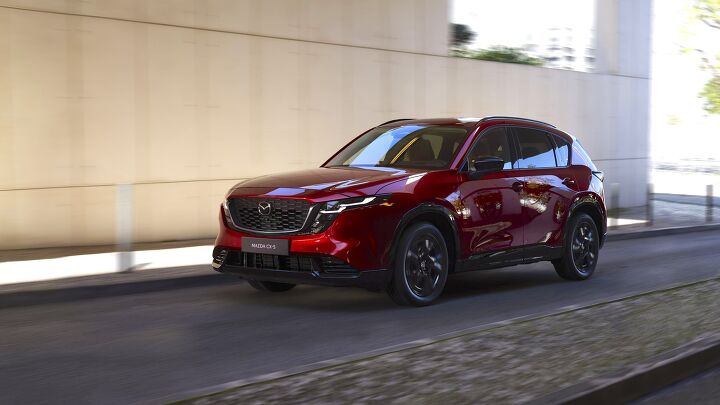
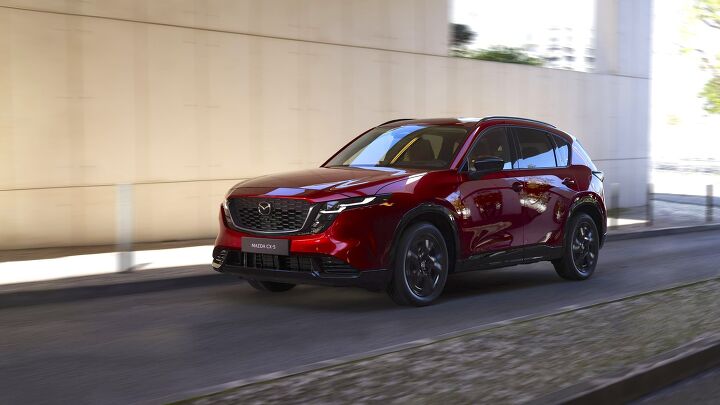
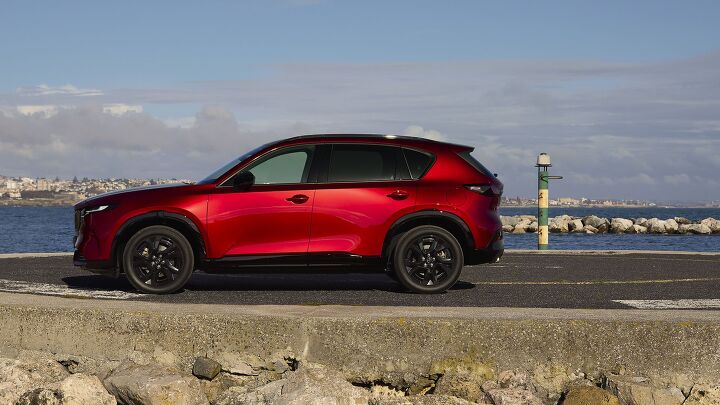
Mazda believes that customers won’t notice some of the cost cutting that’s taken place within the new CX-5. Some of us are less convinced and growing slightly concerned, however.
For 2026, Mazda has issued the CX-5 a major redesign. Included in that was a concerted effort to reduce production costs on what has been the brand’s best-selling model for ages. Mazda has rationalized some of the cost cutting made to the updated CX-5 by citing unfavorable economic conditions.
*Ed. note — we have a contributor driving the CX-5 right now. Stay tuned for a review.
The last several months have indicated to most automakers that the public has finally reached a breaking point. Five years of sustained inflation has resulted in tighter budgets for would-be car buyers at a point where the average new-vehicle transactions have crested $50,000 in the United States. Tariffs have further complicated matters for companies who source parts and/or manufacturer vehicles overseas.
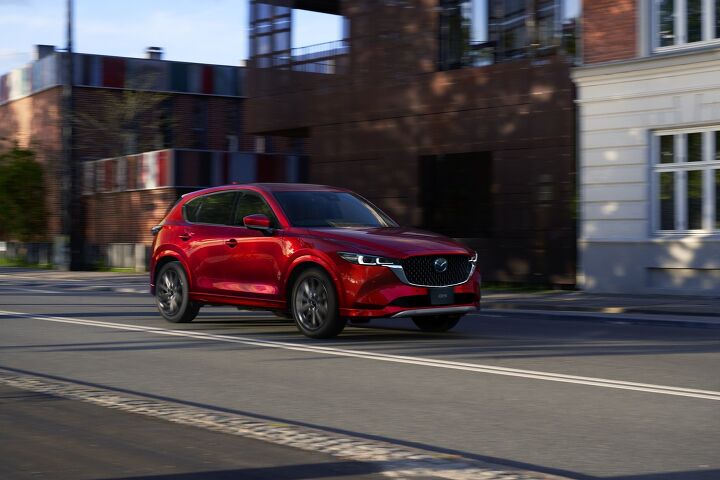
While Mazda has shifted some manufacturing to Mexico (CX-30, Mazda3 sedan), and now even has a factory in Alabama (CX-50), the brunt of its vehicle assembly still takes place in Asia. Most of its products continue being built in Japan, including the CX-5 (outgoing model pictured below), and there is presently a 15-percent, minimum import tariff on those models. This was the primary rationale given as to why Mazda has elected to cut costs on the new CX-5, especially after the business saw a drop in North American deliveries last year.
Officially, Mazda CFO Jeffrey Guyton has told Automotive News that he doesn’t even believe drivers will notice the difference — citing a few key changes designed to protect the model’s profit margins.
“Simply, we put money where the customer is going to see it, and we’ve tried to find big cost efficiencies where the customer doesn’t value it as much or won’t see it,” he told the outlet.
For the sake of the brand, Mr. Guyton had better be correct. However, it’s hard not to feel some trepidation as a customer — especially since the relevant changes still resulted in the model being nearly $1,000 more expensive than it was last year.
Guyton specifically noted that Mazda had revised the stitching on the steering wheel of the updated CX-5, suggesting that few would even be able to identify the change. However, he totally ignored the extensive alterations made to the rest of the interior (below), which now features a significantly larger central touch screen and far-fewer physical buttons. The same looks to be true on that steering wheel that now boasts less-flashy stitching — as it looks to have haptic feedback “buttons” instead of the real thing.
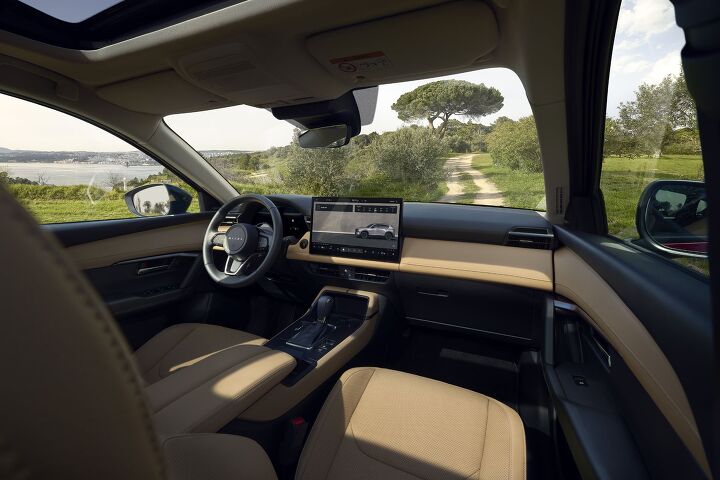
Both of those items have gotten other brands in trouble before. Due to the fact that touchscreens are now cheaper to implement than traditional controls, loads of companies now utilize them. Volkswagen took a sizable amount of criticism when it did the same thing to the GTI and Golf R. People absolutely noticed, with many reviewers suggesting that the pivot to touch-focused controls spoiled what were otherwise excellent vehicles.
Mazda may be in for the same kind of treatment.
Following decades of steady growth inside the United States, the brand has spent the last several years successfully trying to position itself upmarket. Weary of copying Toyota or Honda, both of which are massive automakers relative to Mazda, leadership decided to prioritize smart, attractive designs and desirable driving dynamics. While the lineup strives to be a little fancier than what you’d find at the mainstream dealerships, it also tends to be more affordable than what you’re likely to see from Lexus or Acura.
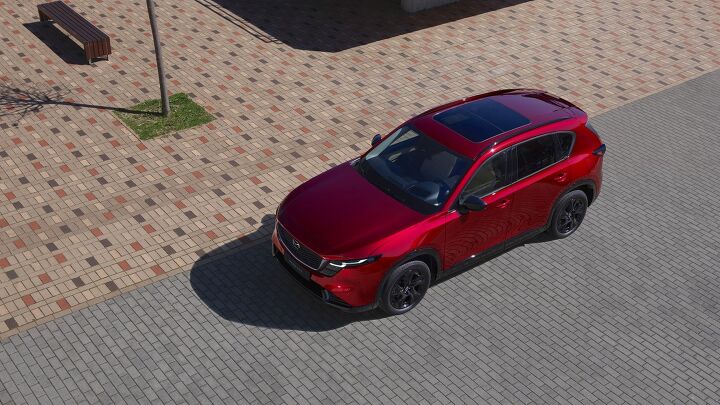
Mazda has always attempted to keep costs down and has primarily accomplished that by utilizing a common architecture between numerous models. For example, whether we are talking about the turbocharged or naturally aspirated variant, the Skyactiv 2.5-liter is used extensively across Mazda’s lineup. As a nice byproduct, producing so many examples of the same engine improved its reliability.
While the automaker has likewise leaned upon cheaper components to reduce overhead, this historically meant retaining older hardware to avoid costly development programs. Like most companies, Mazda would sometimes cheap out on individual parts. But these were typically items you’d never notice without climbing under the vehicle, popping the hood, or tapping every single bit of plastic inside the cabin, and it rarely had a major impact on dependability or the overall user experience.
These newer changes are going to be much harder to ignore.
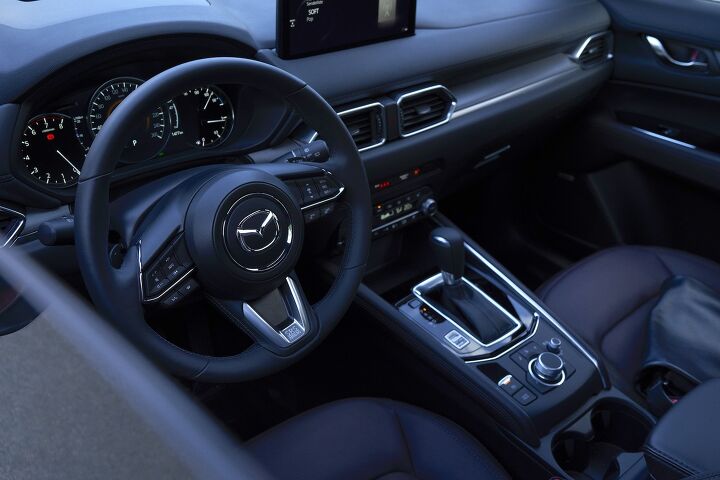
Considering how much care Mazda has taken to ensure its interiors are as attractive as its interiors, this is all a little disappointing. The current/outgoing CX-5 (interior pictured above) was one of those rare modern vehicles that you could operate every single day without ever having to bother with the touchscreen. Everything was smartly laid out and handsome to boot.
However, the new CX-5 has clearly moved away from that to copy what we’ve been seeing from the industry at large. While the new touchscreens may be significantly larger than before, they have also been clumsily tacked onto the dashboard. At a minimum, this was an uncharacteristically inelegant choice from the brand.
It is admittedly difficult not to be sympathetic to Mazda’s present plight. Drivers didn’t ask for tariffs to throw a wrench into the works and automakers have to respond in a way that still makes them money. Mazda may even be correct in assuming that a lot of its customers might not even notice some of its recent cost-cutting efforts. But plenty of them assuredly will, myself included.
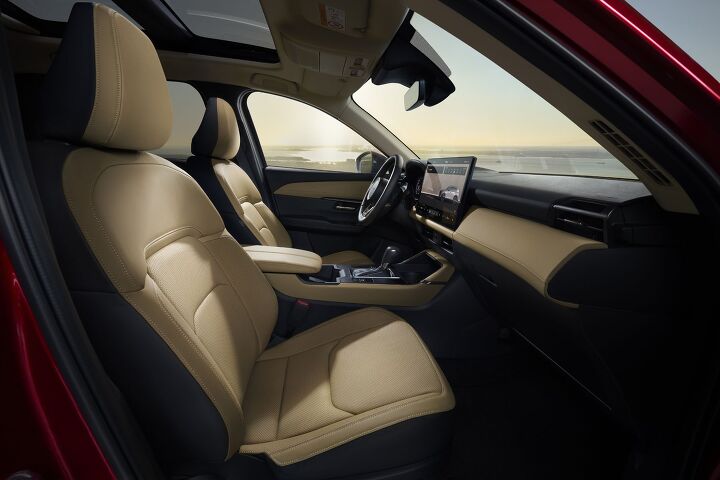
We bought our last vehicle from Mazda specifically because it was offering an affordable, albeit still upscale product that retained physical controls and just enough driving engagement to appease everyone. The brand has developed a decent reputation for itself and these are the kind of changes that could spoil some of that good will if implemented poorly. A slightly thin door card and some faux-leather seats are arguably acceptable compromises on a pseudo-premium vehicle that’s priced competitively. Mazda just better hope that customers feel the same way about being forced into using touch controls as additional austerity measures are introduced.
Realistically, the stitching on the steering wheel probably isn’t going to be a deal breaker for most would-be buyers. But Mazda’s Guyton suggested that was just one of “many” changes made to help reduce production costs. This leaves one wondering exactly how expensive those changes are and how they’ll impact the overall product.
Considering that Mazda’s current plan more-or-less revolves around undercutting premium brands, the new tariffs have certainly placed the company in a less-than-enviable position.
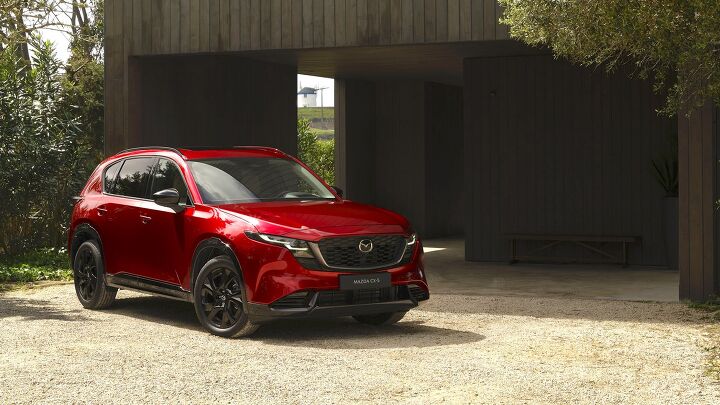
Sizable price hikes certainly won’t be appreciated by its clientele, especially not now. But running with touch controls also undermines past assertions from the automaker that drivers are supposed to drive their vehicle, rather than constantly being forced to fiddle with screens that are proven to be less intuitive and more distracting. It also makes Mazda a little less special relative to its rivals, many of which are also trying to abandon buttons.
But we don’t yet know if the updated CX-5 foreshadows what’s in store for the rest of Mazda’s lineup. Other new models, like the CX-70 and CX-90, have retained the kinds of interiors that have been more typical from the brand. They still come with buttons, knobs, and a modestly sized screen that doesn’t need to be touched often.
The company may just be trying to save money on the high-volume CX-5, with economies of scale assisting in those efforts. However, this does run the risk of tainting what has been the brand’s best-seller for quite some time. One supposes that the reception of the recent cost cutting will ultimately dictate how far Mazda is willing to go with the rest of its fleet.
[Images: Mazda]
Become a TTAC insider. Get the latest news, features, TTAC takes, and everything else that gets to the truth about cars first by subscribing to our newsletter.
