
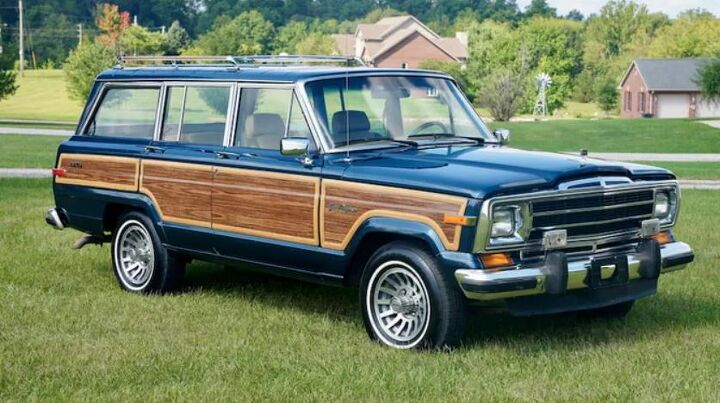
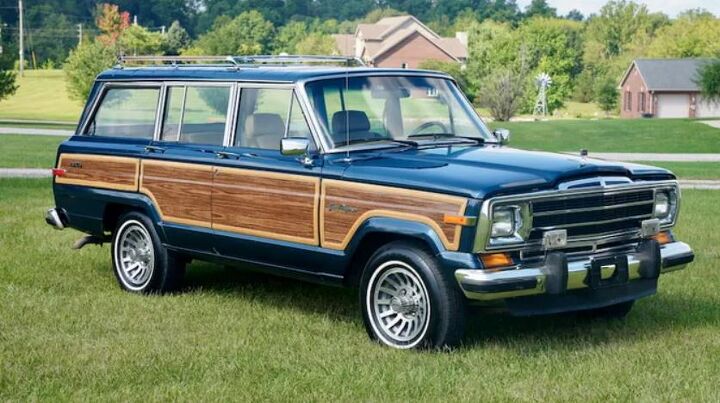
We last left the Jeep Wagoneer at a branching point in 1984, where the SJ Wagoneer Limited was rebranded as the Grand Wagoneer, and the new XJ Cherokee donned some fancy trim and became the base trim Wagoneer and upmarket Wagoneer Limited. AMC’s desired outcome was for the XJ Cherokee to replace the SJ in all ways, and send the old Wagoneer off into the sunset. While that strategy worked for the Cherokee models, buyers were not keen on the expensive and compact XJ Wagoneer. Sales of the new Wagoneer never hit 25,000 in a year and dropped off quickly. Meanwhile, AMC was forced to continue selling the old and outdated but profitable Grand Wagoneer.
As mentioned previously, at the launch of the XJ Wagoneer the SJ lineup was consolidated from two trims into one. The base model Brougham was discontinued, and the Wagoneer Limited was renamed Grand Wagoneer.
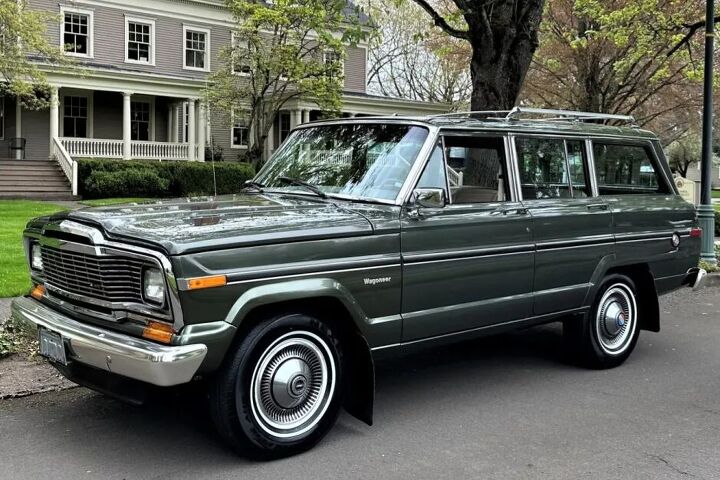
Midway through 1984 the single-model lineup was interrupted when Jeep introduced a Wagoneer Custom, a short-lived and odd experiment. The Custom trim was last used in 1983 and was sold at that time as Custom Wagoneer. But this time the Custom was even more basic. It went without wood trim on the exterior, and used steelies with wheel covers.
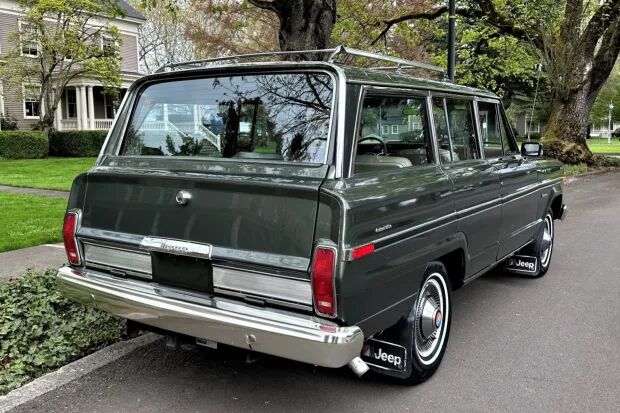
There was much less standard equipment than the Grand Wagoneer, and it had part-time four-wheel drive instead of Selec-Trac. The Custom was priced at $15,995 ($51,832 adj.) in 1984, roughly $3,000 ($9,721 adj.) less costly than the luxurious Grand Wagoneer. Very few customers were interested in a bare bones Wagoneer Custom, and the trim was dropped after only a few months.
Incredibly rare, the Wagoneer Custom stood out as a visual oddity. Though it wore the updated Wagoneer fascia, it lacked any wood or script badging. With the base wheel covers, the bare bones look revealed the elderly lines underneath. There was a black trim strip down the side — an attempt to hide the very plain looking ’60s sheet metal.
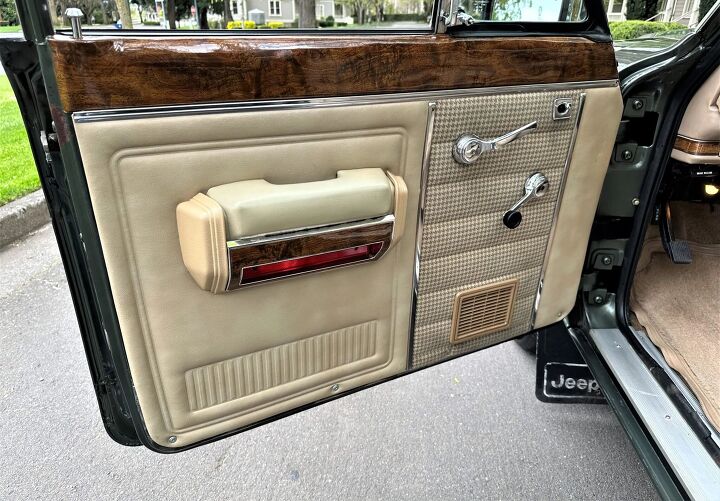
The interior wore less fancy trim as well, particularly where door panels were concerned. Reverting to an earlier style, the door panels lacked much padding or carpet trim. It used a simpler door panel design with less padding, and a fabric insert.
Windows and seats were all manually operated. The seats themselves were of a more basic design than on Grand Wagoneer, with less padding. They also used cloth upholstery (houndstooth here) instead of leather.
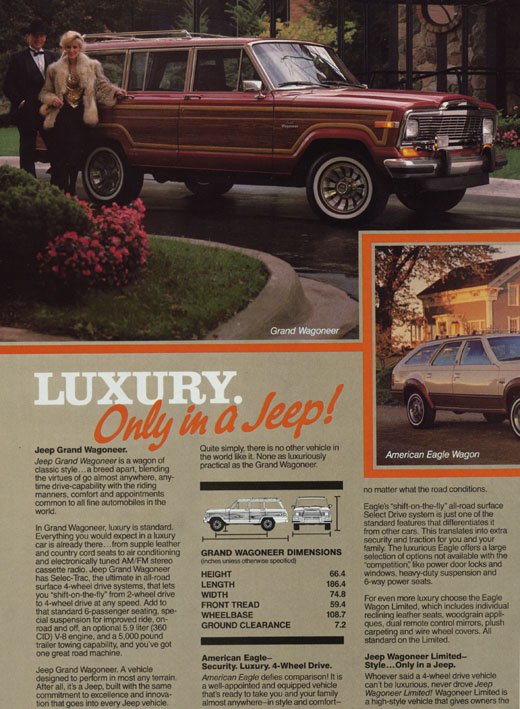
After the half-year venture into the basic Custom trim, it was dropped and the Grand Wagoneer soldiered on alone in 1985. There were updates that year on the handling front, with edits to the sway bar at the front end. Shock absorbers were redesigned as well, and there were revised springs at the rear.
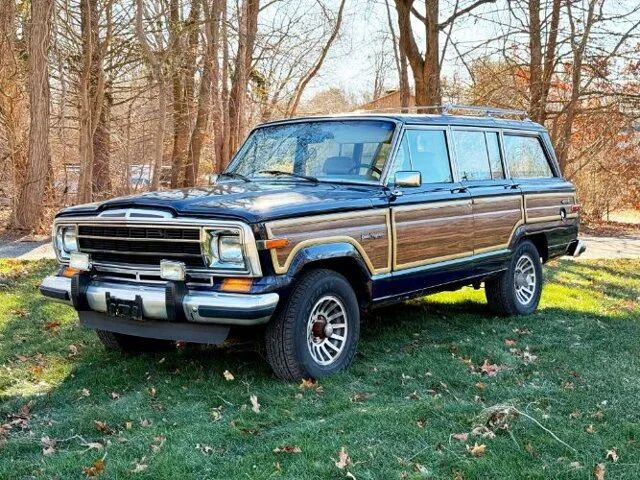
In 1986, the SJ Grand Wagoneer’s final visual refresh occurred, and the front clip was revised again. The grille that tiered outward was replaced with a flat horizontal design, with three rectangular horizontal sections of chrome. Inside them were thin horizontal slats. The top of the grille trim was also revised at the hood bulge, and gained some black inset detailing and a fluted design. Befitting its status as a luxury product, a Jeep hood ornament also arrived this year.
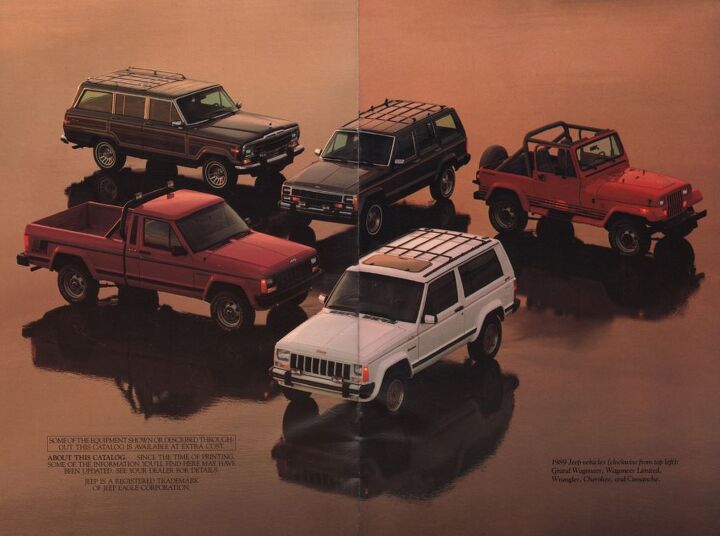
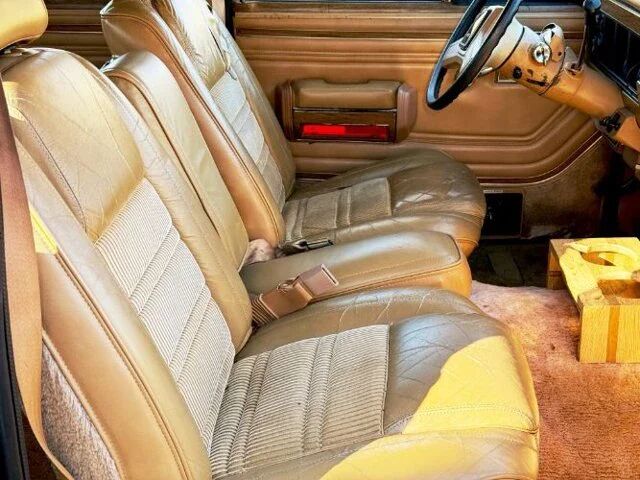
There were changes inside too, and the interior was revised to a great extent. The dash top was new, and so were the gauges. The previously round gauges from inception in 1963 were replaced with square ones. Seats were covered in a new leather style, and there were corduroy cloth inserts available. The headrests were separate from the seatback and were adjustable for the first time.
Door panels were revised, and carpet wasn’t quite as plush as in 1985. The old four-spoke steering wheel was replaced with a two-spoke one from the Cherokee. The climate control was new, and finally meant the AC switch was located in the same area as the rest of the climate control and not on a separate section of the dash. The dash layout looked more cohesive as the metal glovebox lid original to the SJ was replaced with a plastic one that wore the same woodtone as the rest of the interior.
Among the other improvements was an update to the drivetrain. Selec-Trac was updated with a new limited-slip differential called Trac-Lok. It sent power to the wheel with the most traction in any driving situation.
Change was once again in the wind for Jeep in 1987, its last year of ownership by AMC. The Wagoneer had its 25th anniversary and was updated again, though there was no special commemorative edition. New Michelin tires were made standard, and the stereo was upgraded again to include AM/FM with electronic tuning, cassette player, and a total of four(!) interior speakers by Jensen.
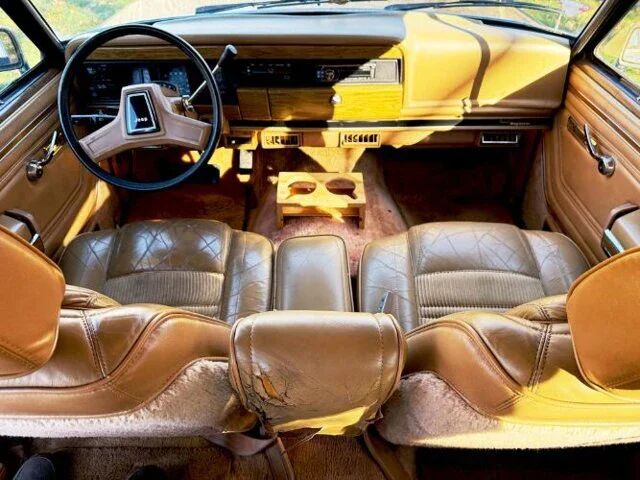
From 1987 onward there was a new look to the exterior wood paneling, which was now called “marine teak.” Badge scripts were revised on the exterior, too. Inside there were slightly different interior colors: tan and cordovan. They replaced the previous colors that were vaguely different, and called honey and garnet. The strap-style interior door pulls were removed, leaving only one grab spot within the arm rest.
By the end of ‘87 AMC and Jeep were under new ownership by Chrysler. Chrysler spent big bucks assuming the debt and assets of AMC, which was well under water by that time. The company had an aging and limited fleet of AMC-sourced vehicles, and Renault products that had proved unsuccessful on the U.S. market.
AMC and Renault were also saddled with a lot of debt, partly due to the costly development of the Eagle Premier, at $260 million ($800m adj.). It was a technically advanced sedan that required its own brand new factory. Renault wanted out, and Lee Iacocca wanted Jeep very badly.
Bad enough that Chrysler assumed a shocking $767 million ($2,277,638,228 adj.) of AMC’s debt in 1987. Once the transaction was made, Chrysler assumed Jeep product development and surprisingly made some more investment into the SJ Wagoneer. We’ll pick up there next time.
[Images: Jeep, YouTube, seller, seller]
Become a TTAC insider. Get the latest news, features, TTAC takes, and everything else that gets to the truth about cars first by subscribing to our newsletter.
