
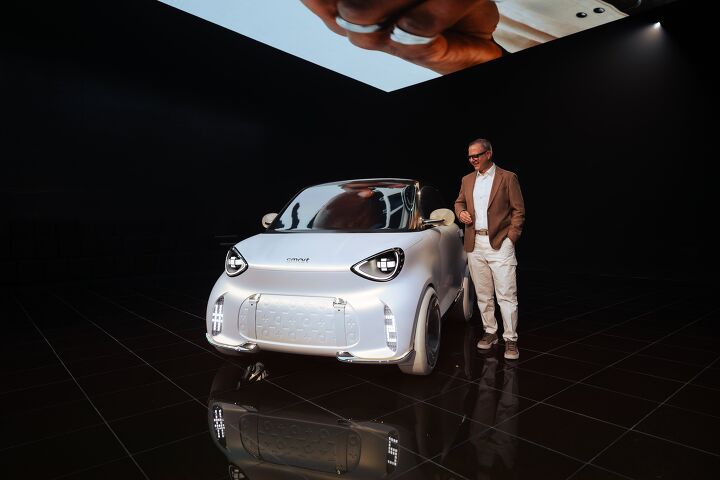
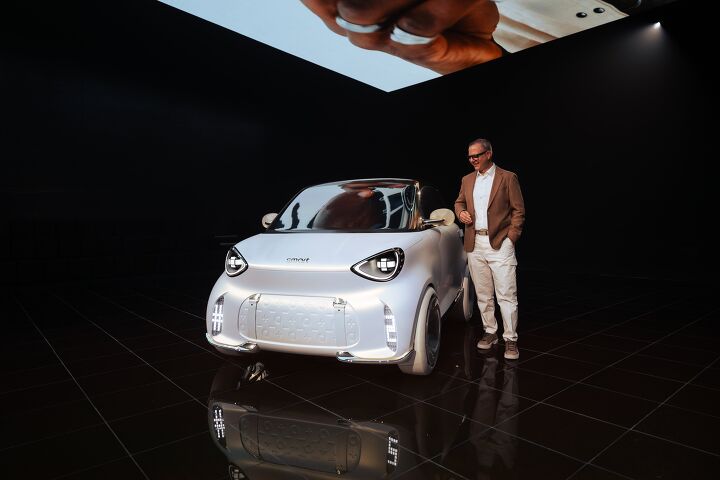
Smart has revealed a concept vehicle foreshadowing the next incarnation of the Fortwo, the two-seat city car originally developed by Mercedes-Benz. Dubbed the #2 concept, the vehicle was previewed in advance of its formal debut at the 2026 Beijing Auto Show.
The unique brand was reconfigured as a joint venture between Mercedes-Benz and Chinese automaker Geely in 2019, pivoting models exclusively to being all-electric vehicles — including the Fortwo. This means that the #2 concept is also an EV, albeit with vastly improved specifications.
Those that have driven the final Fortwo to grace our market are keenly aware that its range was extremely limited. The EPA estimated that it had a maximum operating area of about 60 miles. However, it was rare for it to achieve anything close to those numbers in real-world conditions.
By contrast, the #2 concept is supposed to boast 186 miles of range and is allegedly capable of recharging from 10 percent to 80 percent in less than 20 minutes. That’s rather impressive, even if the China Light-Duty Vehicle Test Cycle (CLTC) and Europe’s Worldwide Harmonised Light Vehicles Test Procedure (WLTP) are far more optimistic about maximum range than the EPA.
It seems likely that Smart will keep the #2 moniker, which is pronounced as “hashtag two.” That’s significantly worse than Fortwo or just Two. Here’s to hoping that the hashtag thing is just something they’re doing for the concept. But we’ve tragically heard British people call current Smart models (all of which now use numeric names) the “hashtag three” or “hashtag five.”
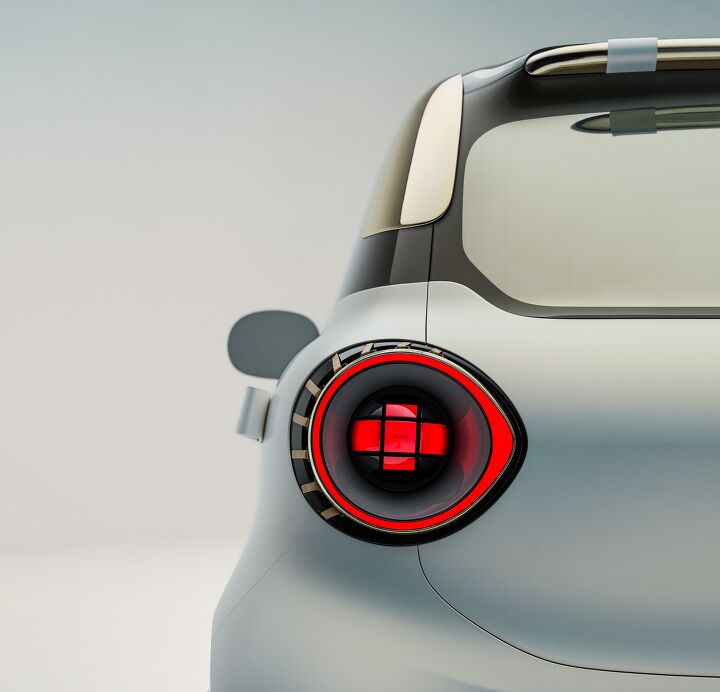
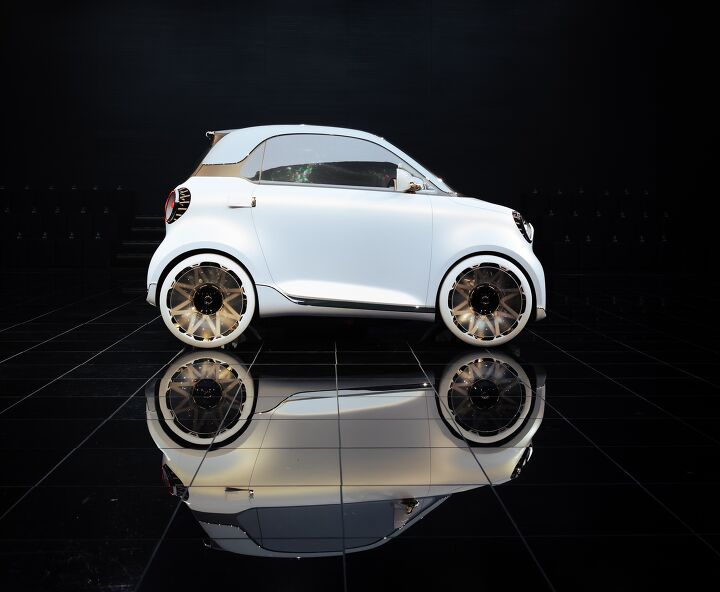
Styling may change once the vehicle sees production. At present, it is decked out in matte white paint and gold trim to cater to Chinese tastes. It’s actually rather attractive, save for the ridiculous leatherette tires. There aren’t any overhangs to speak of and the wheels are pushed out to a point that almost makes the little car look sporty. This was apparently the world of designers at Mercedes-Benz, presumably meaning Geely was more influential when it came to developing the battery and electric motor.
The only misstep may be the front panel that displays the Smart emblem along with plus and minus symbols. The piece is clearly designed to mimic a designer bag and even has faux straps to double down on the premise. Our guess is that this is being done to appeal to women who are more prone to buying smaller automobiles and care about fashionable luggage.
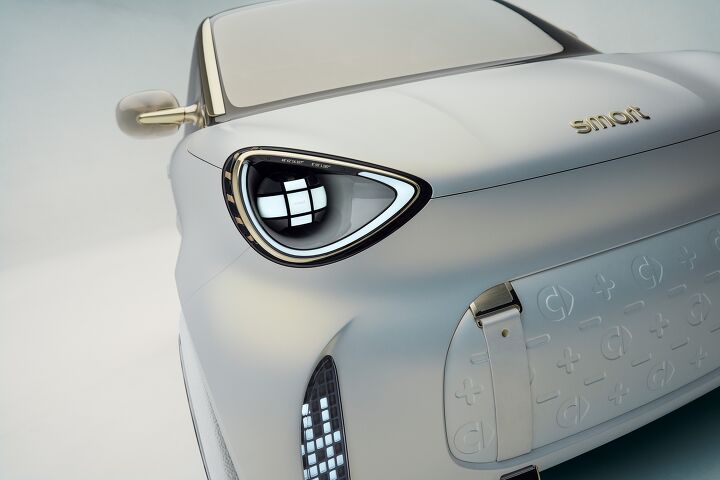
At just 110 inches long, the car will be over two feet shorter than the smallest automobile currently available in North America. But being tiny was always the point and it’ll be sold in Asia and Europe, unlikely to ever grace our roads — which is absolutely fine.
While the Smart Fortwo was always kind of charming, the vehicle was never particularly well rounded. The premise of the Fourtwo was to be the ultimate urban runabout, capable of parking in spaces that not even the most daring Toyota Corolla owner would approach. It boasted one of the tightest turning circles you’re likely to see outside of a shopping cart, too.
But that’s also where the magic of the Smart Fortwo begins and ends. Early generations boasted genuinely horrendous levels of understeer and it would manifest far sooner than seemed reasonable for such a slow automobile. Having once had the displeasure of spending a weekend with the second-generation Fortwo (below), which came with upgraded engines, I cannot imagine how bad the original model must have been to drive.
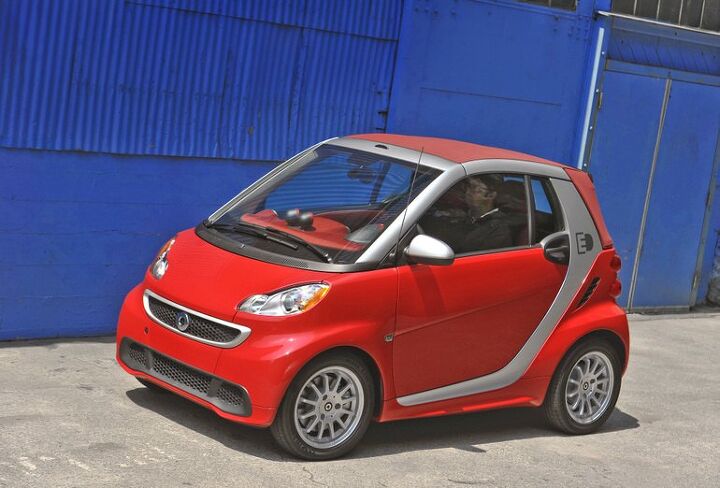
Piloting the Smart on the expressway would force the vehicle very near its stop speed in order to keep up with traffic. But the car did not like to do this on anything other than freshly paved tarmac and attempting to maintain those speeds sapped the fuel economy — which admittedly wasn’t even that good at relaxed speeds considering the engine displacement was just 0.9 liters.
Then there is the size. There are a lot of reasons to like small, practical automobiles and I’ve owned several. However, the Fortwo was so tiny inside that you basically have to appreciate the smell of another person’s breath if you want to take a passenger. Cargo space was likewise abysmal and the cabin was loaded with cheap feeling plastic.
That said, Smart improved every conceivable aspect of the vehicle upon each successive generation. While those efforts were indeed effective, the initial bar was set so low that the model never really achieved greatness on our market. Interestingly, electrifying the ForTwo (as part of the Mercedes EQ offensive prior to the Geely arrangement) was probably the best thing the manufacturer could have done for it. This eliminated any illusions that the car was fit for duty outside of the city and gave it some extra pep around town.
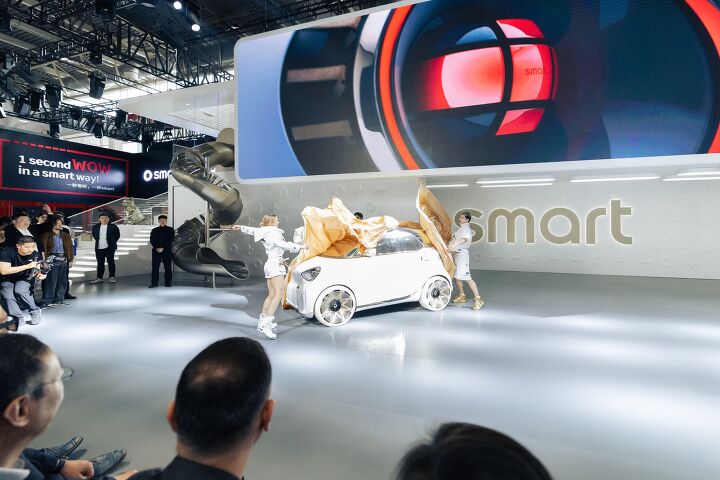
It was probably never going to work for the average American household, regardless of powertrain. But it remains an interesting vehicle for those in need of something to get them through extremely heavy traffic. Considering that the new concept looks to take everything that was good about the all-electric models, perhaps the next generation will be the first version of the Smart that’s worthy of praise. Of course, those hypothetical accolades will assuredly be happening outside of North America where there’s an actual market for something like the Fortwo — er, Hashtag Two.
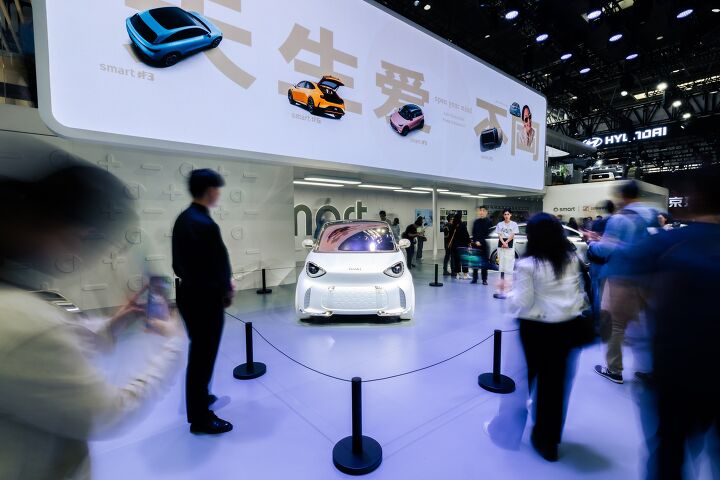
The Smart #2 concept is presently being displayed at the Beijing Auto Show and is likewise slated to appear at the Paris Auto Show this October. European sales are expected to commence early in 2027.
[Images: Smart, Mercedes-Benz]