
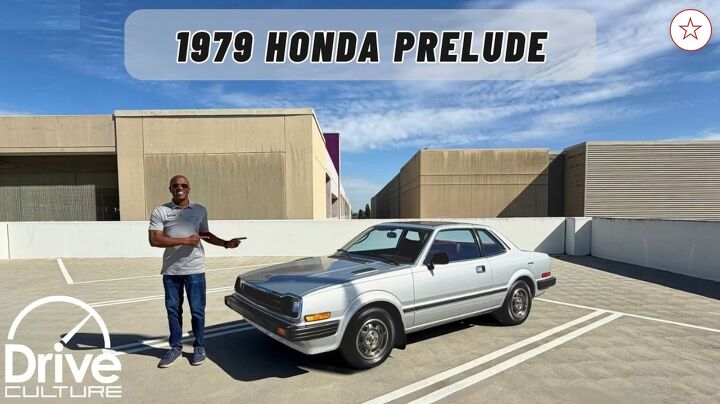
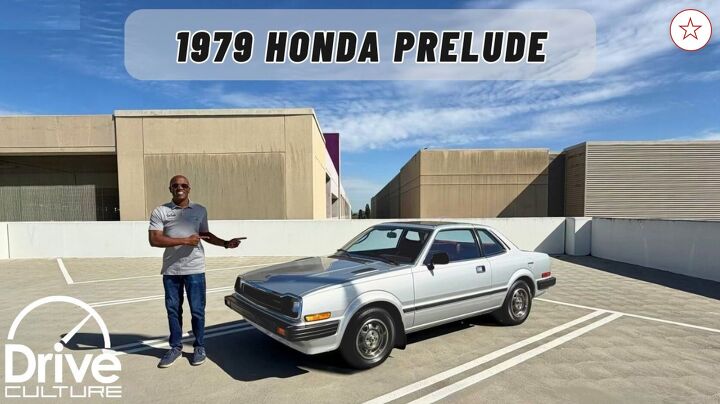
Step back into the late ’70s with the 1979 Honda Prelude, the first‑generation coupe that set the stage for one of Honda’s most iconic nameplates. This video breaks down its design, engineering, and driving character with a focus on the technical details enthusiasts care about.
The ’79 Prelude blends wedge‑era styling with Honda’s clean, compact proportions. Its long hood, short deck, and expansive glasshouse give it a sporty yet approachable look. A power moonroof — standard equipment — was unheard of in this class at the time.
Inside, Honda delivered a surprisingly premium cabin for a compact coupe. You get supportive bucket seats, a driver‑centric dash, and the quirky but memorable tach‑within‑speedometer gauge cluster. Light controls and excellent visibility make it an easy classic to live with.
Under the hood, the 1979 Prelude runs Honda’s 1.8‑liter inline‑four, a naturally aspirated, carbureted engine producing 72 horsepower and 94 lb‑ft of torque. The 1979 Prelude didn’t just introduce a new model; it previewed Honda’s future. Engineering precision, driver‑focused design, and a willingness to push into more upscale territory all started here.
Also check out Drive Culture on YouTube. Drive Culture is detailed car review YouTube channel hosted by the ultimate car enthusiast, Jonathon Rivers.
Who is Jonathon Rivers?
Well, he’s a 15-year-plus auto industry veteran, who was born and raised in the Motor City!
He lived several years in Japan, speaks and reads Japanese, and now works for American Honda Motor. (Although this channel is his own & not affiliated)
He’s owned several fun cars including an Evo IV, multiple Civic Si, Focus RS, and most recently the Integra Type S (which he led planning for Acura)!
He’s also been lucky enough to drive just about every key new product in the market from compact cars to SUVs and EVs as well as super cars!
If that isn’t enough to prove his “car guy” status, Jonathon has also been featured in Motor Trend, Car and Driver, AutoBlog, Jay Leno’s Garage, Raiti’s Rides and the SavageGeese channels! He’s on Instagram here and Facebook here.
Check back every Friday at 7 a.m. PT for new content and videos!
The TTAC Creators Series tells stories and amplifies creators from all corners of the car world, including culture, dealerships, collections, modified builds and more.
A transcript, cleaned up by AI and edited by a staffer, is below.
[Image: YouTube Screenshot]
Become a TTAC insider. Get the latest news, features, TTAC takes, and everything else that gets to the truth about cars first by subscribing to our newsletter.
Transcript
Chapter 1: Intro
0:00
Again, despite its age, this car is holding up really well. So, here we go.
0:03
Finally getting into my … yeah, and then, you know, to get it in gear after a good shift like that, you got to kind of struggle a little bit.
0:12
But it sounds interesting. It has a very high.
0:22
Welcome to Drive Culture. I’m Jonathan Rivers and today I have a 1979 Honda Prelude and I’m going to tell you …
0:30
… why this first generation Prelude is definitely one to remember. So, we’ll go over the exterior, the interior, the …
0:37
… powertrain, and of course, take it for a drive. So, if this content you’re after or you’re new to the channel, please be sure to click that bell to subscribe to …
0:45
… come back for more. And with that, let’s get after it. Now guys, here we are with the original Honda Prelude.
Chapter 2: Pricing & Trims
0:54
That’s right, the very first generation Prelude. And not only that, the fact that this is a 1979 model year means …
1:01
… it’s the actual first model year of the Prelude as well. So, very lucky to have this vehicle uh courtesy of the American …
1:10
Honda Collection Hall, the museum at the U.S. headquarters for Honda in California.
1:16
Definitely check by sometime to see the museum and then come by because sometimes they even do these mega cars,
1:23
bikes, and coffee events as well. But this thing is truly a museum piece, not only in its quality, but how it’s been …
1:30
… maintained. We’ll talk about the mileage during the drive, things like that. But let’s go back and talk about the history of the Prelude, seeing how there’s been …
1:39
… an all-new sixth-generation Honda Prelude that just went on sale. It’s a coupe. It’s a hybrid. It’s causing lots …
1:47
… of stir on the internet. And I also have my own review of the sixth-generation Prelude, including a full studio walk around of the Prelude here on the …
1:55
… channel. So, be sure to like and watch those videos if you haven’t seen those yet. But here we are at the very beginning. And this is kind of showing …
2:03
… the overall heritage and the lineage up to that sixth-generation Prelude. Right.
2:08
So back in 1979, you know, Honda introduced this as kind of this kind of upscale option to both a Civic and an …
2:16
… Accord at the time. And that’s right, it was based off the Accord, actually creating this kind of coupe-like body style for the Accord. This wedge-style …
2:25
… styling that was very significant in the ’70s and even into the ’80s. So it positioned itself as this new entrance …
2:32
… into the lineup for Honda. And while it didn’t have a lot of new technology or features, it did have some first and it …
2:40
… kind of created this new path to this sporty coupe entrant. And that then came on to the second gen, the third, fourth,
2:48
fifth, and now this new sixth-generation of Prelude. My plan is to have reviews of every generation here on the channel soon. So, be sure to come back and watch the other videos once they’re posted.
2:58
So, if we talk about this particular car here, you can see it’s painted in silver. We’ll show you the interior color and talk about that here in a …
3:06
… second, too. But, um, you know, one thing we should talk about is pricing. I don’t have an original, uh, you know,
3:12
3 minutes, 12 seconds
… Munroney label for the car, but estimated pricing at that time was $6,445 …
3:20
… MSRP. So, pretty crazy to think that back, you know, 46-some-odd years ago,
3:26
you could buy a car for less than $7,000 because today the average price of a new vehicle is almost $50,000. So, that …
3:35
… shows you the price of, uh, inflation and how costs have come up over the years. But next, let’s go ahead and do a …
3:42
… full exterior walkaround of this 1979 Honda Prelude.
Chapter 3: Exterior
3:48
All right, guys. Here we are with the exterior of this first-generation Honda Prelude. And honestly, again, I mean, I think, you know, of the six generations,
3:57
I myself don’t even have a favorite, but there’s something really special and unique about this first-generation Prelude in the sense that again, it …
4:05
… started it all. It set the design language, right, with this kind of long front hood, kind of short, you know,
4:12
… rear overhang. You know, it this kind of wedge-shaped styling obviously evolved through the years, became more sleek and sporty. But for the most part for me,
4:20
again, I love the fact that this set the stage for what the prelude will become and for the many generations that came afterwards. So, let’s do a quick walk …
4:29
4 minutes, 29 seconds
… around here. Uh, like I said, this car comes from the actual American Honda collection hall, the museum. So, it is …
4:35
… absolutely pristine. It’s paint, all the body panels, the alignment, there’s like virtually no rust on the car. It truly …
4:44
… is amazing. It’s painted in this nice silver which happens to uh you know capture all of the lines. I mean you can see the hood it kind of has this very
4:53
4 minutes, 53 seconds
big aggressive hood bulges as if the engine actually needed it but it just creates this kind of very sporty intention. You actually had this kind of …
5:01
… like you know venting here in the hood and up at the top as well. So just kind of made it almost look like a kind of sporty muscle car at the time especially with these like flared out fenders. But,
5:12
you know, up front, let’s go ahead and just take in the whole front end. You can see like the nice uh design elements for the uh headlights, uh, the grille …
5:20
5 minutes, 20 seconds
design, still using that honeycomb pattern that they use today. And then down below, you can see it actually had the name Honda, you know, spelled out in
5:28
… the grill. So, it doesn’t have the uh you know, Hark uh on the front of the car. And in fact, at this generation, it had kind of the older um bowed out Hark,
5:38
which you’ll see on the interior on the steering wheel and things like that.
5:41
But, you know, you got the typical kind of huge bumper that juts out due to the regulations back then, amber markers here and there. And then, you know, like …
5:50
… down below, you can actually see the front bumper way down there. But, let’s go ahead and take a full side profile shot of this new Prelude. And then again …
5:58
… like I said this is where you can see where the heritage started that like kind of longer front end you know shorter rear overhang. Again, this a car …
6:07
… essentially created this kind of coupe segment for Honda you know uh creating a new position and making it stand out from the Civic and the Accord at the …
6:15
time. So let’s go ahead. You can see again I love these like fender flares.
6:20
They’re like integrated and stamped into the front fenders. Uh but definitely like bulge out and look really sporty.
6:26
And as we come down and take a look at these wheels, I mean, obviously these aren’t the original tires anymore. Um, but man, the wheels look really good.
6:33
Um, I’ll actually uh focus on um the design on all four wheels, but here you can see it’s got the uh you know,
6:40
nice kind of hubcap style, but it’s like painted in like a kind of like gray color with like a chrome lip there. It’s got that, uh, H mark and uh you know,
6:49
blacked out lug nuts. So, um looks really nice. On this particular car, it is wearing, you know, 1757R13s.
6:58
Those are the series tires. So,
7:00
obviously, like I said, not original tires, but still, um, down to the original spec. You can see the side mirror, the single side mirror. So, they …
7:08
… have the one on the driver’s side. It is manual. Has to be adjusted with your hand. There isn’t one on the passenger side. So, again, for me, that’s taken a …
7:16
… little bit of getting used to. Um, here you can see the chrome treatment around the window. Uh you can see the antenna here uh kind of juts out here. That’s typical old school of the ’70s and ’80s.
7:28
And then yes, this car actually has a power moonroof, which we’ll talk about here in the interior. These nice big,
7:34
you know, chrome handles for the uh the doors. Everything of course is a mechanical key and locking function,
7:40
including the gas cap, which by the way does say Honda on there as well, spelled out. So that is a pretty cool design …
7:47
… element as is this uh vent here on the D-pillar in the back here. You can see the H mark almost upright. So that’s …
7:54
… kind of the old school Honda logo and actually kind of the direction of the new Honda logo if you’ve seen that one online as well. So as we come to the rear here, you can see the side markers,
8:05
but let’s go ahead and take in the full, you know, rear profile of the car. So,
8:11
just like the front, it’s kind of got that wedge styling, very angular design.
8:15
You can see those nice, uh, creases there in the trunk. You can see that Honda again spelled out there uh in chrome.
8:23
Prelude spelled out there in chrome. And guess what? For you manual enthusiasts,
8:28
yep, back then you got a badge that said five-speed to let you know that it was a manual transmission and how many gears you had. But yeah, the uh you know, tail …
8:37
… lights are very squared out. Um, you know, kind of have an interesting design to them. There you can see that uh large rear bumper and then a single chrome …
8:46
… exhaust finisher down in the rear as well. So let me know your guys’ thoughts and comments on the exterior. But since I quickly went over every detail on it,
8:56
let’s go ahead and hop inside to talk about the interior.
Chapter 4: Interior
9:00
All right, guys. Here we are inside this first-generation Honda Prelude. And what an interesting place to be, right? It just shows the uh you know kind of …
9:09
… evolution of interior design and vehicles but at the same time you can see that a lot of the overall design …
9:16
… elements do carry into modern vehicles as well. So again, remember this car is almost 46 years old. So it’s older than …
9:23
… me actually. So that’s pretty crazy. But as I look out you know this car has got this like orangish brown interior right?
9:32
It’s a very unique color. Something you probably won’t find in today’s marketplace. But, you know, it was definitely uh period correct for the …
9:38
… time. So, as I look out in the dash, got great visibility, low dash. That was something the Pills are kind of always known for. Very like driver focus with …
9:48
… your gauge cluster and a lot of your controls right in front of the driver. Where here it’s really just about the,
9:54
you know, climate control vents, the ability to open and close them. Some nice detailing on the dash, your climate controls here, of course, a cigarette …
10:02
… lighter as well as an ashtray. Um, glove box. Um, but there is like some little detailing like they even call out CVCC …
10:12
… uh, on the dash, which is the engine technology. We’ll cover that during the powertrain and drive. But as I come right up front, um, let’s actually talk about the steering wheel first. So, um,
10:22
you know, very thin steering wheels in that era and that continues here with the Prelude. Um, it’s a pretty big size …
10:29
actually despite, you know, given how small the car is. I thought it’d even be a smaller diameter, but I guess by modern,
10:35
you know, standards, it’s a little bit on the small side. But it’s definitely a very thin, you know, kind of leather wrapped steering wheel. Here in the …
10:42
… center, you don’t have any airbags. It just says, and then you actually get four buttons to honk the horn. So,
10:48
apparently, you really had to honk at someone back in the day. But inside here in the middle is one of the most interesting things is just the …
10:55
… badging for the H mark. Not only the fact that it’s the older H mark uh for Honda,
11:00
but how they have it, the badge is kind of embossed, but it has texture and it’s almost like this aluminum finish. So,
11:08
very unique approach. I’d wonder if they’d ever bring that back. It definitely looks really good. Up here on the steering column, you got a thing that says hazard for your hazard lights.
11:17
You actually have a big switch here off uh you know off to the left for your turn signals as well as to turn on and off the headlights. But behind that,
11:25
let’s talk about what you got in front here. So, um, over the left you got um your uh climate control vents, uh, ability to adjust the brightness, um,
11:34
rear defroster. Off to the left you do get a little quartz watch display um and also your radio. It shows you the …
11:43
… channel and whether it’s AM and FM. You can actually adjust the sound of the uh you know kind of your equalizer here.
11:50
And then off to the right is like one of the most interesting ways to not only turn on the radio but adjust volume. You kind of like spin this inner …
11:59
11 minutes, 59 seconds
… ring here to like not only turn it on but (also) increase the volume. Then you have this outer one that actually like flips through your channels. So that’s a whole …
12:07
… thing. And then if you pull it out that gives you a more granular level to like scan through the channels. So, it was a very interesting way to use the …
12:16
… radio back then. But then right behind that, you have one of the most interesting and maybe controversial uh kind of gauge clusters of its time.
12:25
So you have a typical fuel and temp gauge off to the left. A little LCD type of display off to the right, but right in the middle you …
12:33
… basically have a combined speedometer and tachometer and all like in one meter. And actually, in today’s standards
12:41
and other cars have done this now it it’s not as controversial but at the time there was a lot of information is maybe a little confusing. So it’s …
12:49
… actually only on this very first 1979 model year from 1980 on they actually changed it and split out the gauges the …
12:58
… tachometer and the speedometer because of the feedback that they got in the marketplace. So, pretty crazy that they made that change just after one model …
13:06
… year. In front of that kind of this 3D effect, you get these lights for, you know, your parking brake, your headlights, hazard lights, things like …
13:14
… that. So, it’s a very interesting gauge cluster. Next, let’s go ahead and talk about the material. So, again, you got this kind of like leather material …
13:21
… on the doors, even some contrast like piping. You know, single um door handle. Of course, manual lock roll …
13:30
… down windows, guys. Here we go. I’m actually going to roll it down for you.
13:33
So, everything is very analog and very manual. And some of that is not just the period. Some of that is the price point and really the segment at the time,
13:41
but man, cars have come a long way as far as the feature content that’s in them. Here in the center console area, you don’t even really have cup …
13:49
… holders. You just have a big kind of square uh little pocket here. You’ve got the five-speed manual transmission,
13:55
manual side brake, and that’s it. So next if we talk about the seats, they are very sporty actually in their design …
14:03
… there is this kind of like fabric material on top but there is contrast stitching and piping on the seats. They look pretty nice and again given the …
14:11
… ’70s you know theme and vibe. The color was definitely period correct and I’m sure this is what people were after back then. But the headrests have a very …
14:19
… unique design. Honestly, they almost look like the H mark, right? Because they kind of jut out here at the edges. So, very unique design up front. We’ll hop in the …
14:28
… rear and show you that in a sec. But lastly, I want to talk about this power moon roof. It’s crazy. You actually have …
14:35
… a shade that slides open. And yes, the actual has a power moon roof, which is crazy to think that it would power open …
14:43
… and slide back in 1979, especially given the price point. That must have been a definitely premium feature of the era.
14:51
So, I think we quickly covered everything up front. Next, let me hop in the second row and see how much space is back there. All right, guys. Here we …
15:00
… are. I somehow squeezed into the second row of the Honda Prelude. Now, I did this for you guys, so come on. Give me some credit here. But, you know,
15:10
it’s beyond tight. I mean, this is actually my driving position. So, to be fair, if I slid the seat up an inch or two, I’d have a little bit more room,
15:20
but literally, I’m like squeezed in. My feet are somehow under the seat. I’m like straddling the back of the seat. There’s just not a lot of room back …
15:28
… here. So, this is obviously for like small children really. That’s all it would be for. Um there’s some pockets here in the side. You do get the same …
15:36
… kind of nice material up front. No headrest here in the back. No armrest that comes down. That wasn’t a thing. So, it’s pretty spartan back here.
15:44
And like I said, this is probably only for small children. So, next let’s quickly hop out to check out the cargo area.
Chapter 5: Cargo
15:51
All right. Next, let’s go ahead and check out the cargo space of this 1979 Honda Prelude. So, there is a latch inside to pop open the trunk. Also, use the mechanical key here. Pops right up.
16:03
And there’s a lot of space back here,
16:06
guys. Surprisingly, um, you know, it’s very wide. It’s very deep. And the fact that this is a very small coupe, it …
16:13
… really is surprising. Now, I’ve had to search around to find the exact cubic feet of space. From what I’ve seen …
16:19
… online, there was roughly 9.1 cubic feet of space back here, guys. But I don’t know, at glancing eyes, it looks like …
16:28
… it’s probably even more. You could easily fit two large suitcases or more back here. So, it’d be a great little weekender car and, you know, to get you …
16:36
… around town, you know, and do your shopping and things like that. So, uh, definitely a lot of space back here.
16:42
One of the things that I’m also going to show you here in uh, B-roll is the original license plate that the last …
16:48
… owner had on this car. Very cool that they were able to get this plate and they actually have it in the kind of historic, you know,
16:57
California blue and gold. It says 79 LWD. I think that’s super cool. So, I wanted to throw that in as a nice little Easter egg for you guys. But next, let’s go ahead and talk about this powertrain.
Chapter 6: Powertrain
17:09
All right, guys. Next, let’s go ahead and talk about the powertrain of this 1979 Honda Prelude. Now, you can see the …
17:16
… way that the hood lifts up. So, I’m actually going to kind of come around to the side. Of course, I’ll show you on B-roll what the engine bay looks like,
17:24
but this engine was really significant.
17:27
This is that CVC engine by Honda, which stood for compound vortex controlled combustion.
17:36
Yes, it’s a mouthful, right? But the significant of this engine was the fact that it was introduced in 1975. It was …
17:44
… the first of its kind. It was able to circumvent and pass the Clean Air Act,
17:49
these super, you know, strict emission regulations in the ’70s without using a catalytic converter. There’s a whole …
17:58
… story about how Mr. Honda even went and sent a car to a competitor at the time to prove the point that yes, it can be …
18:04
… done using one of their own vehicles. So it really changed the industry and in fact the technology actually even got licensed out to Ford and Toyota after …
18:13
… it launched in the Accord. Now here it is in the Prelude and it was pretty much lifted out of the Accord at the time.
18:21
It’s a 1.8-liter naturally aspirated carbureted engine and in this configuration here it makes 72 …
18:30
… horsepower and 94 foot-pounds of torque. It’s front-wheel drive and mated to a five-speed manual transmission.
18:38
So, there’s no better way than to prove that out than to get behind the wheel.
18:42
So, next, let’s go ahead and take this thing for a drive.
Chapter 7: Drive Review
18:46
All right, guys. Here we are inside the 1979 Honda Prelude, first generation, first model. You’re going to go ahead and take …
18:55
… this thing for a drive. So, I’m going to go ahead and put on my kind of brown-colored seatbelt here. Click that in. Clutch in. Mechanical key in. Twist.
19:09
All right, there she goes. She started up. It took a little bit of cranking to get her there, but she started up.
19:15
Threw it in neutral. So, it is a five-speed manual, talk about how it drives. You know, like a lot of my normal reviews, I got to start out and …
19:23
… talk about electronic parking brakes and drive modes and all that stuff. Don’t have to do any of that in this car. So,
19:29
it’s uh it’s pretty nice, but it’s a little toasty. So, I’m going to actually roll with a low fan speed. So, you may hear that in the background, but other …
19:37
… than that, we’ll talk about how it drives. And yep, she actually turned off. So, let’s go ahead and get her started back up and head off. So, you …
19:45
… know, hey, it’s the quirks of a car that is older than me. It’s actually older than me. I was born in 1980, so this car is older than me. So, that’s pretty …
19:54
… crazy. But outside of that, this car actually is in really good shape.
19:59
I’m a little over 20,000 miles on this thing. And like I said, this car comes from the American Honda collection hall.
20:07
It’s an actual museum piece. They’ve been using this vehicle as well as the other, you know, five generations of …
20:15
… Prelude now to showcase the heritage of the cars, where it all got started from, you know, and really …
20:23
… allowing people to drive the different generations to see that lineage and that connection even to that all-new sixth-generation Prelude. So,
20:32
I’ve got a few of the other reviews here on the channel. um things like the uh fourth and fifth gen. Now the new …
20:39
… sixth gen. This is the first time I put this uh first gen on there and I plan to get the second and third generation on here as well. So I’ve got all six …
20:48
… generations including driving impressions like this here. So, you know, first and foremost, I will say,
20:55
you know, like I said, you’re getting some of the sound from the …
20:58
air conditioning, the HVAC system, but other than that, this car actually has really good, you know, NVH even by, uh, this model year standards.
21:07
The car is really quiet. It’s composed. Obviously, there’s squeaks and rattles and stuff because the car is again 46 years old, but outside of that,
21:16
the car has is really held up well. You can see the fit and finish and the build quality has …
21:24
… really held up over time. The materials you know again we talked a lot about this in the interior but as I sit here for the light you can just feel that the …
21:32
… quality of the materials and everything really kept up. So one of the things that I also talked about in the interior was this crazy tachometer combined …
21:41
… speedometer gauge cluster that they had in here. And you know, now that I’m driving behind it, it doesn’t seem that strange. But even in front of that, they …
21:50
… have your turn signals and your headlights and these other warning lights kind of almost creates this like 3D effect that it sits in front of the …
21:57
… tachometer. So, it was just such a unique design for that, you know, kind of gauge cluster at the time. And like I said in the interior part,
22:07
Honda actually went ahead and changed it for the very next model year because there were some uh comments and feedbacks related to it. But, you know,
22:14
as I look back now in a retro …
22:17
… lens, it does look cool and it looks probably like nothing else on the road at the time. But here we are setting out. You know, it’s easy to like rev it …
22:26
… out. Like I said, it’s a 5-speed manual transmission. I’m doing 40 mph right now. So, just kind of scooting along.
22:33
Oh man the ride quality is really good. Suspension is good. Like I said,
22:38
there’s a little bit of road noise, but not much. But um the other thing is the visibility in this car is really good. You know, there’s a big glass right,
22:47
you know, windshield right in front of you. But it’s easy to …
22:51
… see out even though the roof line’s kind of low. Um you know, I only have one side mirror. You know, that was a thing back in the ’70s, right? So I’ve got …
23:00
… my one side mirror off to the left. Of course, you have to literally physically manually adjust it yourself. But,
23:06
that doesn’t bother me. And outside of that, I still have really good visibility, great visibility out back. So, next, we’re going to go ahead …
23:14
… and drive this thing on this kind of typical drive route that I take, so you can see how it handles some of the bumps, get a little bit of idea of the handling and acceleration and …
23:23
… performance. So, this first one here is actually a pretty uh um good train track. and try to get up to speed. Get it to like a little over 30 miles an …
23:31
… hour as I go over it. So, let’s see how it handles that bump. No, it’s pretty good. I mean, obviously,
23:37
… again, a little bit of creeks and rattles and things like that, but handling’s pretty good in that first turn. So, this next train track here …
23:46
… is actually a little bit more aggressive. So, I’m going to try to go about 35 mph and see how this handles it. This one can actually, you know,
23:54
lift you out of the seat in some sports car tires. So, let’s see how it does. Here we go.
24:00
Now, that was that was actually really good. There was again squeaks and rattles from the car, but you know,
24:05
really no undulations into the chassis or the you know, the suspension didn’t really travel too much. So, yeah,
24:11
that was pretty good. So, here I am, you know, just scooting around town. Like I said, it’s kind of nice about driving such an old analog car. There’s not a …
24:19
… lot of buttons to press. There’s not a lot of drive modes and other, you know,
24:23
mechanical things and, you know, chimes buzzing at you. So, it’s very raw. It’s very analog. But, um, you know, no, this car, like, again, by modern standards,
24:33
of course, it’s not fast. But, you know,
24:35
at the time, it was still a good performance, you know, a step up, especially from something like the …
24:41
… the Civic and the Accord at the time. And although it used that same CVCC engine from the Accord, just the fact that it was a little bit more wedge …
24:49
… safe styling, it gave it a little bit more sporty overall design. As I look across the interior, again, it’s very simplistic as we talked about in the interior walkaround,
25:00
but it just helps during driving.
25:01
You’re not really distracted by anything else. So, all right, we’re finally going to be able to set out here and try to uh get into it. Knowing that this car is very old and a museum piece,
25:11
I won’t be able to just completely beat it up. But, you know, one of the things about this car is it does like to rev out. It shows on the tachometer that …
25:19
… the red line is actually just under 6,000 rpm. So, it’s probably like 5,750 where it sits on the meter. But, we’ll try to rev it out, see how it does.
25:30
See how it sounds, right? And,
25:32
you know, kind of see where that uh, you know, CBCC lives in the uh, in the overall history of Honda here. So, got to get the stuff behind one more light
25:40
25 minutes, 40 seconds
and then I’ll finally be able to open it up a little bit. But I will say this, the shifter still feels really good.
25:46
25 minutes, 46 seconds
Very easy to engage. Uh clutch still feels really good. So, again, despite its age, uh this car is holding up really well. So, here we go. Finally …
25:54
… getting to uh Yeah. And then, you know, to get it in gear after a good shift like that, you got to kind of struggle a little bit.
26:03
But it sounds interesting. It has a very high pitch kind of growl to it and …
26:11
… not like VTEC. It’s you know before those engines came out but um it definitely still has a nice growl to it especially at the higher RPMs.
26:20
As I sit here in fourth gear, I’m able to get up to like you know almost uh you know 55 m an hour at …
26:28
… a pretty good clip. Again, by today’s standards, it’s not fast but you know I’m sure at the time this was plenty quick for the era. And again, it’s like …
26:36
great visibility, handling is really good. Again, it wasn’t a sports car even for its era, but it still feels like …
26:44
… that typical Honda like fun to drive DNA that’s, you know, found in a lot of their modern products still. Uh, SUVs,
26:51
sedans, coups, it doesn’t, you know, you name it. It’s just how the cars drive that, you know, have this, you know, kind of car characteristic,
27:00
driving performance. So, here we go. Got to rev it out again a little bit. Shift in a second. There we go.
27:09
Got in front of me here, but letting it rev out. It’s interesting …
27:16
… there. Even can do a little bit of heel and toe, too. So, that’s not bad, right? And like I said, it’s not a sports car.
27:22
I’m not trying to drive it like one, but it definitely has that sporty driving characteristic.
27:28
Brakes are actually surprisingly good on this car, too. They don’t feel mushy at all. I’m going to try to get into some turns here a little bit,
27:37
and just see how the handling does overall. But like I said again, this car I think when people go back and they remember how the Prelude …
27:45
… started. Like I said, this is the very first generation, very first model year,
27:49
you quickly realize that this car was never a highperformance sports car. There was never a Type R in any of the generations. So,
27:57
you know, obviously the new Prelude maybe got a lot of uh flak for being a hybrid and being something different,
28:03
but you know, again, as you go back through the model years and look at the different generations,
28:08
none of the cars were ultra-high performance, right? So, this fits in,
28:12
you know, again, as you go generation to generation all the way to the new 61, it starts to make a little bit more sense.
28:19
It really does. So, here we’re going to go ahead and try to turn in and check out the handling. So again, there’s no fancy new power steering …
28:28
… or anything like that. So you kind of got to, you know, work your way with the handle, but it feels good. Chassis and suspension feel good. Even got my camera loose there for a second. So no,
28:38
it uh, it definitely feels good. And so one last thing here, again, heel and toe and then kind of turn in again. You …
28:45
… know, can’t go too fast. Tires will squeal, but you know, brakes feel good.
28:49
And yeah, this thing’s a lot of fun to drive. So, let me know your guys’ …
28:53
… thoughts and comments down below. Is this first generation Prelude the best generation? Tell me what your favorite generation of Prelude is. Also, what you …
29:01
… think of the new sixth-generation Prelude. And if you haven’t watched my other videos on all the other Preludes, be sure to like and watch those as well.
29:08
And with that, I’m going to go ahead and wrap up this drive.
29:12
All right, guys. That’s a wrap. What did you think of this 1979 Honda Prelude? Is this first-generation Prelude really the …
Chapter 8: Outro
29:20
best of them all? Let me know your guys’ thoughts and comments down below. Let me know what is your favorite generation of Prelude all the way up to this newest …
29:29
… sixth-generation Prelude that just went on sale. Let me know what was maybe one of your favorite features about some of the older Preludes. I’d be love to go …
29:38
… through the comments and read your feedback. So, if you’ve joined me before, thank you so much. But if you’re new to the channel, please be sure to …
29:45
… click that bell to subscribe. Come back for more. Thanks, and we’ll see you at the next episode.
