
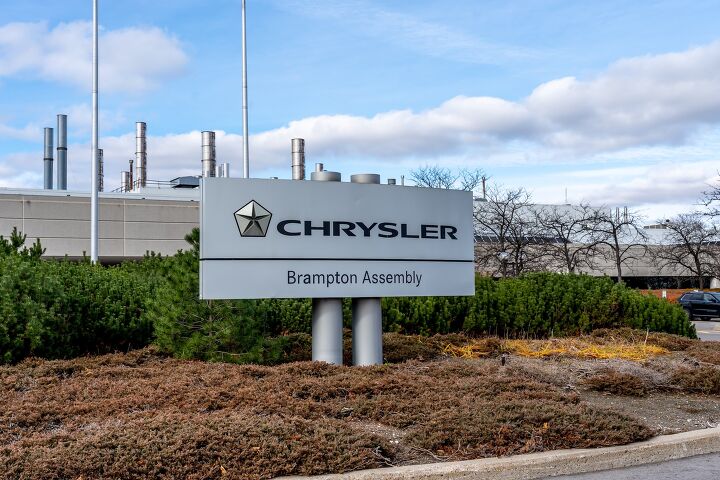
It’s no secret that Canada is worried about automotive jobs and is doing what it can to guarantee there’ll be more in the future. This now includes rezoning the land where the currently idle Brampton Assembly Plant is located.
Production at the site has been suspended since 2023 without any clear plan regarding what will be next for the facility. Stellantis had originally planned to use the site to manufacture the updated Jeep Compass. But plans were changed and domestic assembly (slated to commence in 2027) was shifted to Belvidere, Illinois, while production had already kicked off in Italy.
Brampton was formerly responsible for building the Chrysler 300, Dodge Charger and Dodge Challenger. But it has almost 40 years of history putting together automobiles in the rear window — with almost the entire timeframe being dedicated to Chrysler legacy brands.
Exactly why Stellantis didn’t stick with Brampton is up for debate. Officially, Stellantis said it was concerned about tariffs. But it had already been dragging its feet on retooling Brampton prior to Trump taking office. Still, we know the site was making some amount of progress before the plug was finally pulled in 2025.
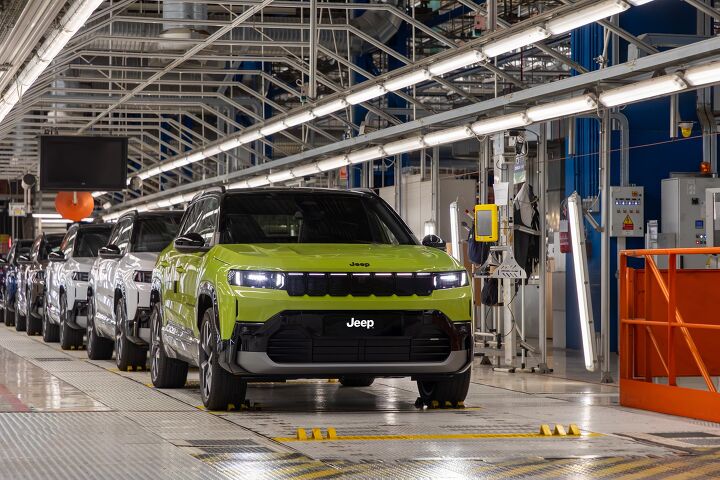
Regardless, the local government is worried about there being 3,000 fewer jobs in Ontario and has opted to try and force Stellantis to make use of the facility. According to Automotive News, the Brampton city council voted unanimously to rezone the land exclusively for automotive assembly and parts production.
“If Stellantis thinks they can go and build condos there, they can fly a kite. This is for auto jobs,” Brampton mayor Patrick Brown said during the council meeting.
The obvious intent of the rezoning plan is to encourage the automaker to utilize the facility and discourage it from selling the land to developers. Unifor (Canada’s auto union) has praised the action.
“Our members in Brampton have demanded that all levels of government take action to protect the future of their plant and their jobs and we are pleased to see this concrete action by the city,” said Unifor National President Lana Payne. “Permanently designating Canada’s existing auto footprint for vehicle manufacturing only is smart industrial policy and I commend Mayor Brown and all Brampton City Councillors for working with our union to get this done.”
But Stellantis hasn’t said much on the matter. Officially, the company has stated that it’s likewise interested in utilizing Brampton Assembly for the purposes of vehicle manufacturing. It just hasn’t gotten around to determining what that will entail. However, a spokesperson said that protecting jobs was among the company’s “top priorities” and that Stellantis was actively evaluating what to do with the site in a way that would guarantee a long-term, sustainable commitment to suppliers, employees, and the community.
That certainly sounds like the automaker is taking the matter very seriously. But it also lacks any firm commitments. Still, allocating production isn’t something that a smart business should take lightly and Brampton would be best served by a higher-volume product. That’s likely of little consolation to the 3,000 out-of-work autoworkers, however.
While Canada hasn’t been the world’s second-largest producer of automobiles in decades, the industry remains important. It often comes up in political discussions, especially those pertaining to the retention of domestic jobs in Ontario. Canada remains an essential component of North American vehicle production.
However, the country currently finds itself in a complicated situation. Manufacturing jobs have steadily declined since their peak in 1999. Layoffs were initially attributed to advancements in automation. But it gradually became clear that automakers were shifting production to Mexico in an effort to lower production costs. This accelerated in the wake of the 2008 financial crisis.
Since then, Canadian officials have managed to secure investments from numerous automakers to pivot factories toward building all-electric vehicles. Driven strongly by the Canadian government trying to tempt the industry with incentives, the first big commitment came from Stellantis in 2023. This was followed by similar commitments from other brands (e.g. Honda), with the focus often being on electrification.
But there are growing concerns that the estimated employment figures will be much lower than originally assumed. Stagnating EV sales, accompanied by the United States walking back stringent emission controls and automakers revising investment promises, have resulted in real questions about how much business Canada’s forthcoming EV production will actually yield.
Canada has even walked back some of its own electrification targets. The nation previously had an EV mandate requiring 20 percent of new vehicles sold in the country to be entirely electric by 2026 and 60 percent by 2030. Total electrification was supposed to occur by 2035. But it has become abundantly clear that those metrics aren’t remotely achievable, especially in a region that’s subject to cold climates that can sap the maximum range of EVs.
This has placed real pressure on labor unions and politicians promising jobs stemming from electric vehicle production. However, sales targets have only been walked back slightly. Canadian leadership still has a mandate to see majority EV sales well before 2035 and has even freed itself up to bring in Chinese brands to make sure that happens.
[Images: JHVEPhoto/Shutterstock; Stellantis]
Become a TTAC insider. Get the latest news, features, TTAC takes, and everything else that gets to the truth about cars first by subscribing to our newsletter.
