
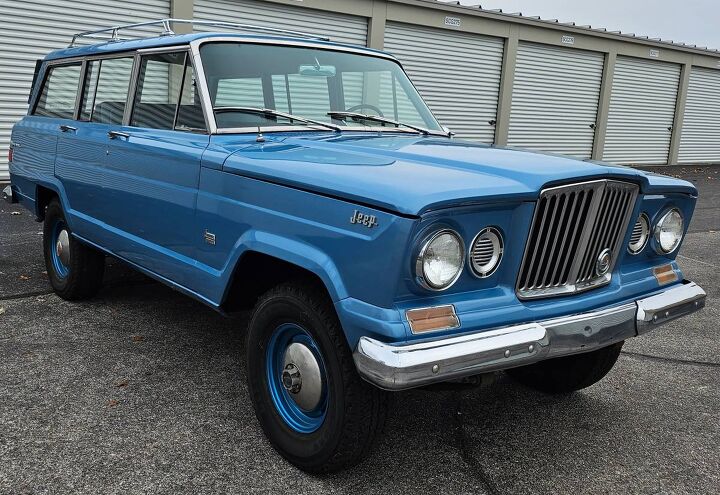
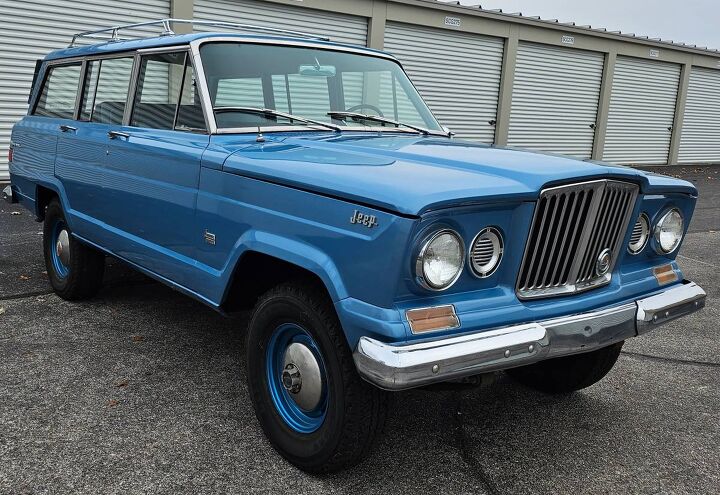
The Jeep Wagoneer debuted in 1963 as a new kind of utility wagon, designed with everyday ease of use and practicality in mind ( Part I). As a midsize truck, it was smaller and had better handling than its competition. Wagoneer even featured an automatic transmission on four-wheel drive models, a novelty at the time ( Part II). But perhaps most important for its success was the clean-sheet design of its wagon body.
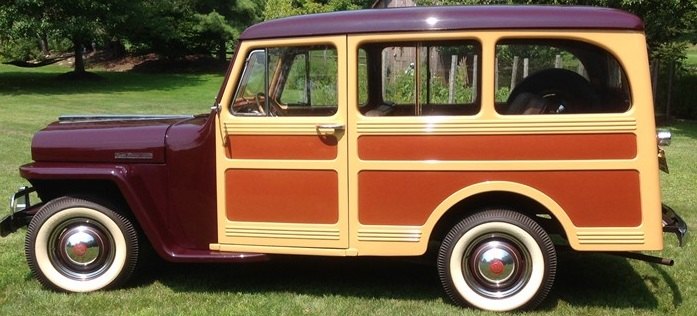
The Wagoneer appeared in American showrooms in 1963 alongside its predecessor the Station Wagon. One of the few vehicles from the Forties still in production, the Station Wagon would remain on offer for another year before the Wagoneer took over fully. Little tied the two vehicles together visually, apart from a 10-slot grille. Forced 7-slot grille harmony at Jeep was not yet a consideration.
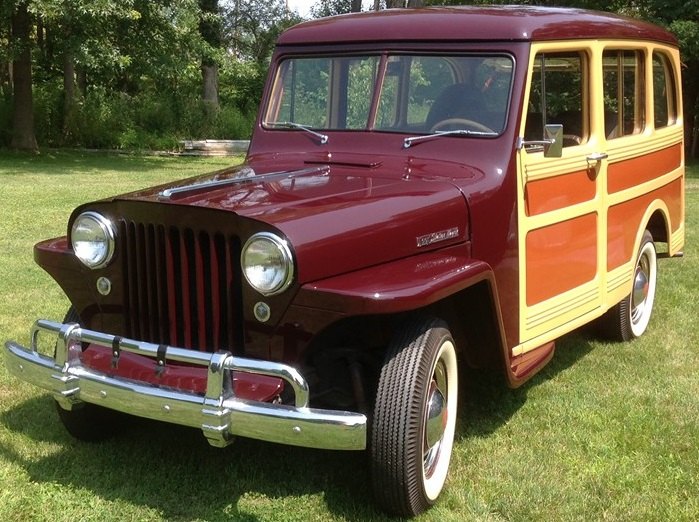
The Wagoneer was certainly more angular than its predecessor. Its chrome grille leaned forward for a more aggressive look, different to other Jeeps where the grille was near vertical. Its overall design was a simple square opening with a circular Jeep medallion in the lower corner. The grille came to a point in the middle, where it concluded the hood’s well-defined power bulge.
At either side of the grille were circular cut-outs with additional vents for the engine. They looked like a place where some additional smaller headlamps or driving lamps could be added, but that never happened. Larger sealed beam lamps were next to the vents at either side, and ringed in thick chrome.
Underneath the headlamps were the indicator lenses, flush with the beveled edge of the front end as it angled outward to the bumper. A nice touch when examined as a single element. Serving as front end decor, a simple chrome bumper wrapped a short way around the front fender. Large and stylized chrome bumpers were not a thing for utility vehicles just yet.
The Wagoneer’s hood with its power bulge wrapped over the front clip, where it tucked in at the hood shut line. The hood also flowed over the edge of the fender, where it formed the Wagoneer’s curved shoulders. The curved surface extended smoothly under the length of the greenhouse.
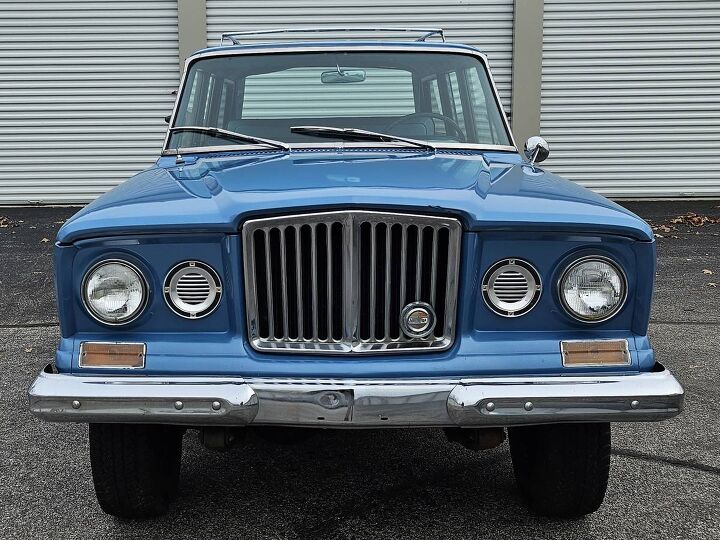
At its front corner the hood carried the very beginning of the body character line, joining the two separate surfaces together. That line cut downward around “Jeep” in festive block lettering, and then carried in a straight line through to the rear lamps. Wheel wells were angular, in contrast to the circular design traditionally worn by Jeeps.
Said wheel wells formed the lower character line on the body and continued to the rear end. This had the effect of making the Wagoneer look lower to the ground and more substantial. A four-wheel drive badge was the only other fender adornment at the front end. Emphasizing its utility purpose there was no chrome on the lower sill, it was all painted metal.
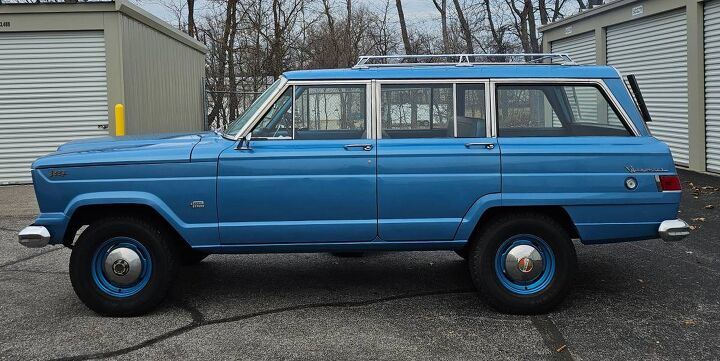
Simple door handles in chrome were atop the body near the greenhouse, which was an usual placement at the time. The upright pillars were all encased in chrome, and were thin for excellent outward visibility. There was a large glass area generally, with all window edges wearing chrome. The wiper spindles were also chrome.
The side profile reflected the Wagoneer’s design as a wagon from its inception, and did not have the “crew cab truck with cap” appearance of the competition. Thin window frames and pillars made for a cohesive exterior look. A D-pillar that angled forward meant rear glass was not vertical, and allowed a sportier side profile.
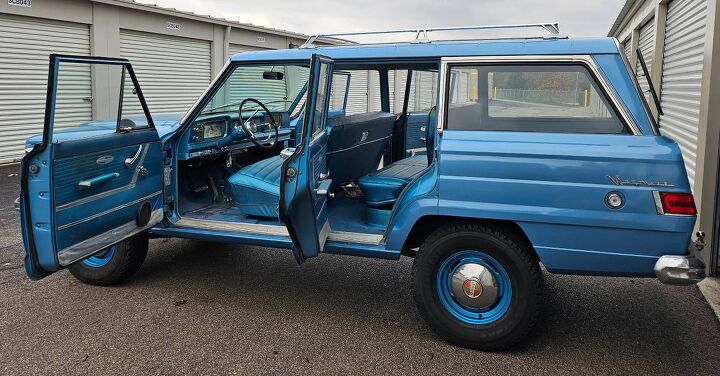
At the rear fenders all the body character lines vanished around the rear end. Wagoneer script angled toward the front, and simple tail lamp lenses were framed in thin chrome. At the rear, the thin D-pillars met a large rear window. It rolled down into the tailgate before it could be lowered.
The base of the D-pillar formed a new character line that ran under the window, and formed a short lip before angling downward to form the tailgate. Viewed directly from behind, it almost looked as though the Wagoneer had a short trunk lid.
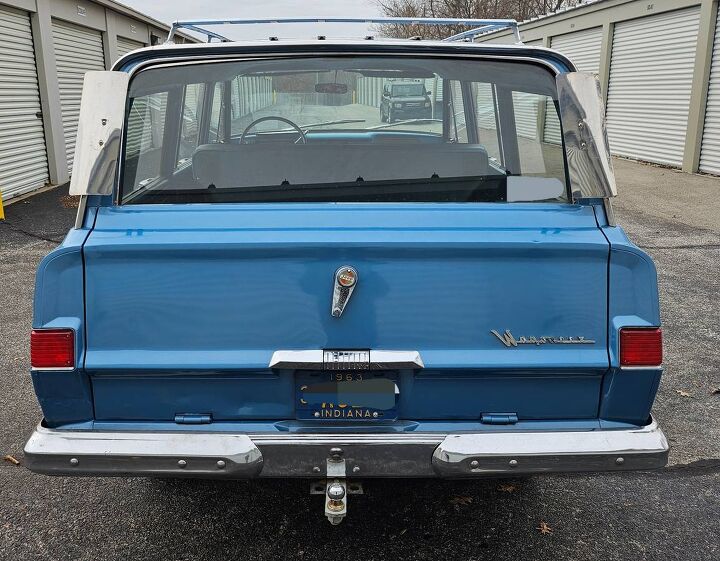
Curved bodywork at the base of the rear pillars tumbled downward to the thin brake lamps, which were balanced at roughly 50/50 lens area between the side and the rear. Between the lamps was a sharp crease that formed a surface for the tailgate handle in chrome. Above it was a manual tailgate window winder that wore a Jeep logo. A stylish left slanted Wagoneer script was at the right side of the tailgate.
At either side of the simple license plate mounting area were the only two visible hinges on the Wagoneer, for the tailgate. Wrapping around either corner was a chrome bumper that was nearly identical to the one at the front. This particular example has chrome rear wind deflectors, a rare option.
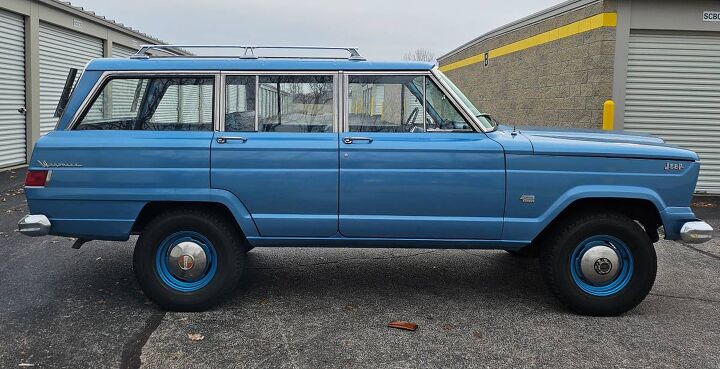
But in 1963 a lot of things were optional extras, and our subject vehicle is fairly decked out as a four-wheel drive automatic. The chrome luggage rack was an optional extra, and fitted more often to the Wagoneer than other utility wagons of the era. This example also wears chrome half moon hub caps with the Jeep logo, and body colored wheels. In our next installment we’ll have a look at the Wagoneer’s interior, which was positively upmarket for a truck-based vehicle in 1963.
[Images: seller, seller]
Become a TTAC insider. the latest news, features, TTAC takes, and everything else that gets to the truth about cars first by subscribing to our newsletter.
