
If you’ve ever spent any time around South American car culture, you’ll know that it’s built on an intoxicating mix of necessity and lunacy.
When you live in a country with strict import laws, a lack of foreign sports cars, and an industrial policy written by people who clearly preferred buses, the result is a kind of mechanical Darwinism—cars built not because they should exist, but because people refused to accept that they couldn’t.
And that’s precisely where the Bianco S was born.
The TTAC Creators Series tells stories and amplifies creators from all corners of the car world, including culture, dealerships, collections, modified builds and more.
A transcript, cleaned up via AI and edited by a staffer, is below.
[Image: YouTube Screenshot]
Become a TTAC insider. Get the latest news, features, TTAC takes, and everything else that gets to the truth about cars first by subscribing to our newsletter.
Transcript:
If you’ve ever spent time around South American car culture, you’ll know it’s built on an intoxicating mix of necessity and lunacy. When you live in a country with strict import laws, a lack of foreign sports cars, and an industrial policy seemingly written by people who preferred buses, the result is a kind of mechanical Darwinism. Cars are built not because they should exist, but because people refuse to accept that they can’t.
That’s precisely where the Bianco S was born.
This was Brazil in the 1970s—a country full of potential and utterly starved of sports cars. Ferrari? Forget it. Porsche? Not a chance. Even Alfa Romeo was a rare sight. But what Brazil did have, in the literal millions, was the Volkswagen Beetle. It was everywhere—the country’s automotive currency. The platform on which people learned to drive, fell in love, and occasionally wrapped themselves around trees.
Into that landscape stepped a man named Otacílio Bianco, an Italian immigrant who looked at the Beetle and thought, “That could be a sports car.”
Bianco’s story reads like something out of a Latin American folktale. Born in Italy, he arrived in Brazil after the Second World War. He started out working in banks and building houses before stumbling into the world of car repair. It was in a workshop in São Paulo’s Italian district of Bela Vista that he found his calling.
Like many great car builders, he wasn’t satisfied with fixing cars—he wanted to create them.
By the 1960s, Bianco had become a respected racing car designer, building open-wheelers and sports prototypes that competed successfully on Brazilian circuits. He even developed Brazil’s first Formula 3 car, cementing his place in the country’s motorsport history. But racing wasn’t his only ambition. He wanted to build something beautiful for the road—something that could stand shoulder-to-shoulder with European exotics, even if it relied on Beetle underpinnings.
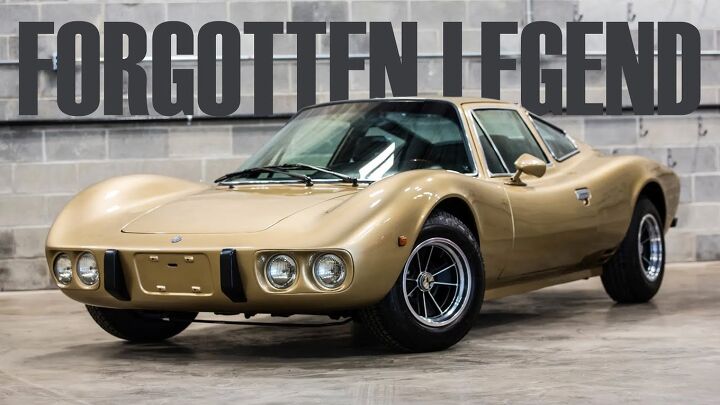
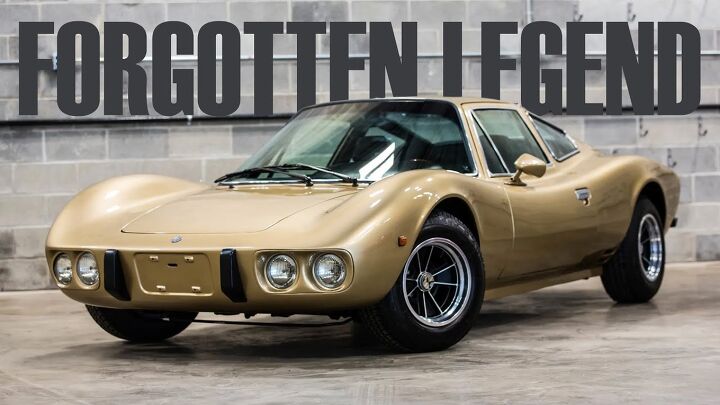
In 1976, at the São Paulo Motor Show, Bianco unveiled his creation: the Bianco S. It was sleek, low, and constructed from reinforced fiberglass and plastic. Underneath, it was pure Volkswagen. But what mattered was that Brazil finally had a homegrown sports car that ordinary people might realistically afford.
It’s easy to dismiss the idea of a sports car based on a Beetle. But Porsche built its reputation on similar foundations. The Bianco S used the Beetle’s 1.6-liter air-cooled flat-four engine, mounted at the rear and paired with a four-speed manual transaxle. It retained much of the Beetle’s suspension and steering, giving it handling that could be described as lively, if not entirely composed.
Still, Bianco didn’t just drop a fiberglass shell onto a stock chassis and call it finished. The body was entirely his own design—lightweight, sculpted, and reinforced with steel substructures and sheet metal for added strength. It also incorporated safety features such as roll bars, reinforced sills, and front impact protection, which were far from standard at the time.
The engine, modest as it was, benefited from dual carburetors, increasing output to around 65 horsepower. That doesn’t sound like much today, but in a car weighing roughly 700 kilograms, it was enough to be engaging. The Bianco S could reach 100 km/h in 17.7 seconds and top out at about 146 km/h.
Not especially quick by modern standards, but in mid-1970s Brazil, this was meaningful performance. And thanks to its Volkswagen roots, reliability was a strong point. It could tolerate poor fuel, long periods of neglect, and still start without complaint—something that couldn’t always be said of contemporary Italian sports cars.
Despite its humble mechanicals, the Bianco S looked like something far more exotic. Its wedge-shaped profile, low stance, and clean lines gave it genuine presence. Components were sourced pragmatically: headlights from Volkswagen models like the SP2, and taillights from Opel. The result was cohesive rather than improvised.
It had the proportions of a mid-engine European GT, even if the engine remained firmly mounted at the rear.
Fit and finish were also better than expected. Panels aligned properly, paint quality was respectable, and the doors closed with a reassuring solidity. Inside, the car featured black leather bucket seats, a wood-rimmed steering wheel, a wooden gear knob, and even power windows—an unusual luxury in Brazil at the time. The instrumentation was straightforward: a 200 km/h speedometer, a tachometer with a 5,000 rpm redline, and basic warning lights.
By 1978, the updated Series II Bianco S introduced refinements based on real-world use. Ventilation was improved—an important change for an air-cooled car in a warm climate. Hood louvers were removed for a cleaner appearance, and sealing around the doors and windows was enhanced. These updates didn’t change the car’s fundamental character, but they made it more usable day-to-day.
At its peak, production reached as many as 20 cars per week—an impressive figure for a small independent manufacturer. In total, somewhere between 320 and 400 units were built before the company shut down in 1979.
So what went wrong?
Like many small automakers, Bianco ran into the realities of economics and regulation. Brazil’s government, while supportive of domestic industry in principle, imposed high taxes and strict regulations that were difficult for small companies to navigate. At the same time, competition from Volkswagen’s own SP2 added pressure. Bianco simply didn’t have the resources to compete with a major manufacturer.
The company closed its doors in 1979, ending production after just three years.
Even so, Bianco himself never really stopped. Well into his 80s, he was still working on cars, reportedly developing a mid-engine sports car as late as 2018 at the age of 86. The drive to build never left him.
Today, the Bianco S has achieved cult status, particularly in Brazil, where it’s seen as an important piece of national automotive history. Few examples remain, and fewer still are in pristine condition. Those that survive aren’t valued for outright performance, but for what they represent: a moment when creativity and determination overcame significant limitations.
In the end, the Bianco S is a car defined by optimism. It isn’t fast, luxurious, or especially practical. But it is thoughtful, distinctive, and historically significant. In a country largely cut off from the global sports car market, one individual decided that if Brazil couldn’t import a sports car, it would build its own.
And for a brief moment, it did.
