
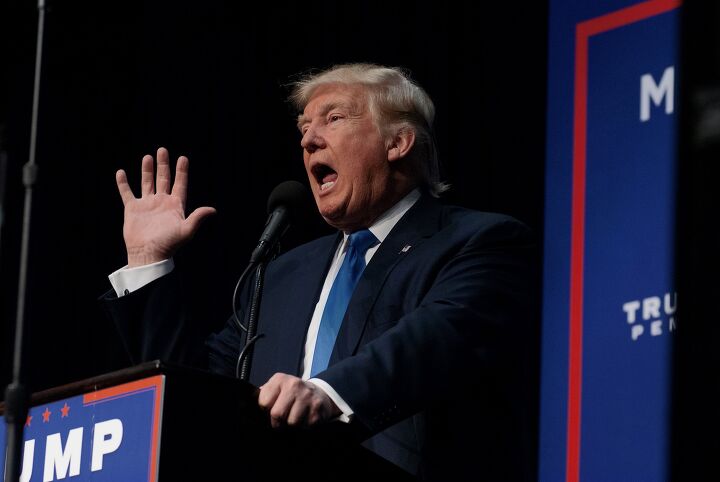

The administration of President Donald Trump has pulled out of an international agreement that is meant to combat climate change.
This agreement has been in place for 34 years, and all of the other countries in the world are members of the treaty.
President Trump posted on social media that he signed a presidential memorandum that would pull the United States out of the agreement — formally called the U.N. Framework Convention on Climate Change — along with 65 other pacts and international organizations. Around half are U.N. organizations.
Trump claimed that these treaties and international organizations “no longer serve American interests.”
From a statement by Secretary of State Marco Rubio:
“As this list begins to demonstrate, what started as a pragmatic framework of international organizations for peace and cooperation has morphed into a sprawling architecture of global governance, often dominated by progressive ideology and detached from national interests.”
The climate treaty was created in 1992 and formed the legal basis for the Paris Agreement, which is a voluntary pact among countries to keep global temperatures below certain levels. Trump has already pulled the U.S. out of the Paris agreement, with that becoming official later this month on January 20th.
Additionally, Trump is pulling the U.S. out of several other climate agreements. From The New York Times:
The administration said it was also pulling the United States from the top United Nations climate science body, the Intergovernmental Panel on Climate Change, as well as a host of other major international environmental organizations. They include the International Renewable Energy Association, which represents global clean energy interests, the International Solar Alliance and the International Union for Conservation of Nature.
The Times points out that this move comes as rival China is working to be in a dominant position when it comes to clean-energy tech. Meanwhile, American allies like Australia, the United Kingdom, and the European Union are also working to reduce emissions from greenhouse gasses while simultaneously attempting to improve renewable-energy technology.
It will take about a year for the withdrawal to become official after the U.S. files a formal withdrawal notice with the U.N. Once it’s in effect, the U.S. will have to sit out annual negotiations taking place between 200 nations — negotiations that aim to cut the amount greenhouse gas expelled into the atmosphere.
It’s unclear how, if all, this move will affect the automotive industry — Trump has already rolled back fuel-economy regs. What is clear is that for whatever reason — an attempt to please the oil lobby, ignorance, or a rejection of wind energy because windmills change the view from golf courses he owns — Trump and his administration are going to ignore scientific consensus about the dangers of climate change, as well as evidence-based policies that could lead to a cleaner planet.
Even the New York Times, which tends to avoid editorializing in news articles, didn’t mince words:
The moves cement the United States’ isolation from the rest of the world when it comes to fighting climate change.
The decision is not only an indicator of America’s rejection from global diplomacy, it’s a finger in the eye to the billions of people, including Americans, suffering through intensifying wildfires, storms and droughts, threats to the food supply and to biodiversity, and other dangerous and costly effects of a warming planet.
Taking off my reporter hat and putting on my pundit hat, I tend to agree with Times. A cleaner atmosphere is better for all of us, and as is the case with the fuel-economy regulation decision, Trump is moving us backwards. I say this not as a liberal or anti-Trumper, but someone who likes to breathe easy — a desire that should be bipartisan.
We’ll be monitoring this development to see how it affects the automotive industry.
[Image: mark reinstein/Shutterstock.com]
Become a TTAC insider. Get the latest news, features, TTAC takes, and everything else that gets to the truth about cars first by subscribing to our newsletter.
