
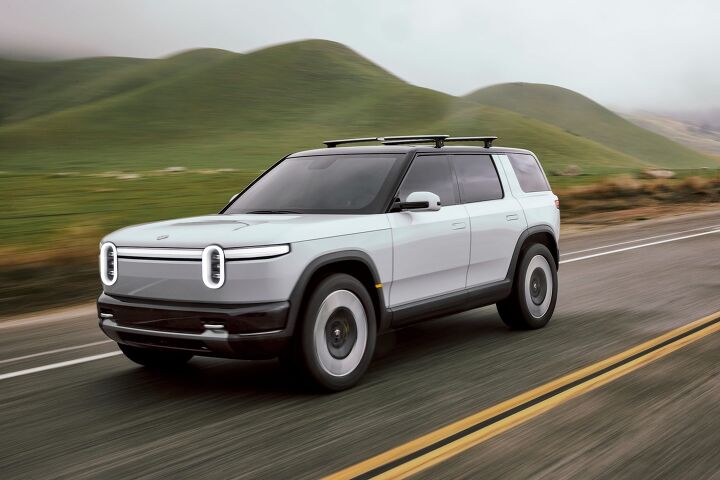

Rivian not only knows how to build sought-after electric vehicles (EV), but it’s very good at attracting investors. The latest being Uber which plans to invest $1.25 billion over the next five years to purchase 10,000 autonomous R2 robotaxis.

The plan calls for Uber to invest $300 million right away with the remainder coming pending regulatory approvals. The first R2-based robotaxis will begin testing in San Francisco and Miami in 2028, according to the company.
“We couldn’t be more excited about this partnership with Uber — it will help accelerate our path to level 4 autonomy to create one of the safest and most convenient autonomous platforms in the world,” said RJ Scaringe, founder and CEO of Rivian, in a release.
The self-driving cabs will use Rivian’s third-generation autonomous technology, which is expected to be ready by the end of this year. Automakers don’t all share the same mindset when it comes to the technology needed for safe, self-driving vehicles.

Rivian’s newest platform features a multi-modal sensor suite including 11 cameras (65 megapixels), five radars and one lidar. The consumer platform is driven by two of Rivian’s in-house RAP1 chips, capable of 1,600 TOPS (trillions of operations per second).
This platform pairs advanced connectivity and onboard intelligent data collection, along with data from all onboard sensors to power Rivian’s data flywheel with real world data from the customer fleet, including the critical 3D LiDAR point clouds essential to the rapid progression of advanced end-to-end Physical AI, the company says.
“The scale of Rivian’s growing data flywheel coupled with RAP1, our state-of-the-art in-house inference platform, and our multi-modal perception platform make us incredibly excited for the rapid advancement of Rivian autonomy over the next couple of years,” Scaringe said.

If the test vehicle hit all their milestones, the companies will have deployed thousands of unsupervised Rivian R2 robotaxis across 25 cities in the U.S., Canada, and Europe by the end of 2031. The companies also have the option to negotiate the purchase of up to 40,000 more autonomous Rivian R2 vehicles beginning in 2030.
Uber is just one of several investors in Rivian, the largest of which being Volkswagen. The German automaker is expected to plow as much as $5 billion into Rivian to gain access to its battery and other EV-related technologies, which are largely expected to help bring its new Scout brand to life.
Rivian’s other large investor is Amazon, which has a $1.3 billion deal with the automaker to develop and build all-electric delivery vans and related tech. Thousands of these purpose-built vehicles are in use across the country right now.