
Volkswagen is again reminding everyone that knows it messed up by running with touchscreens and abandoning physical controls. Leadership wants people to understand that won’t be the case moving forward. But one wonders how much of what’s being said will yield real changes to vehicles and what’s just noise.
VW CEO Thomas Schäfer recently spoke with TopGear, and was quite frank about how badly the automaker has been about some of its recent design choices.
“It was clear we were losing our core,” he told the outlet.
No doubt. Automakers have taken sustained criticism for most of the trends they’ve been chasing since about 2015 and it’s starting to impact profitability. For Volkswagen, this has meant declining sales. The company saw a 2-percent decrease in global sales for 2024 (year-over-year) and a 0.5-percent decline in 2025.
The purported culprit was lackluster EV volumes in North America and a declining demand in China as the market began to prioritize domestic models. But some of the brand’s design decisions have undoubtedly played a role.
“VW has always been about cars that became part of people’s lives: reliable, easy to understand,” stated the CEO. “Yes, geopolitics, supply chains and competition [had an effect], but we also had to change our own mindset.”
From TopGear:
Schäfer, who became VW top dog in mid-2022, says the company has totally reapproached how it designs cars. “In the ‘old’ days we made a long list of requirements and features, but people didn’t feel comfortable using [the end product]. Now we think about people. Who is the car for? Who is driving it?”
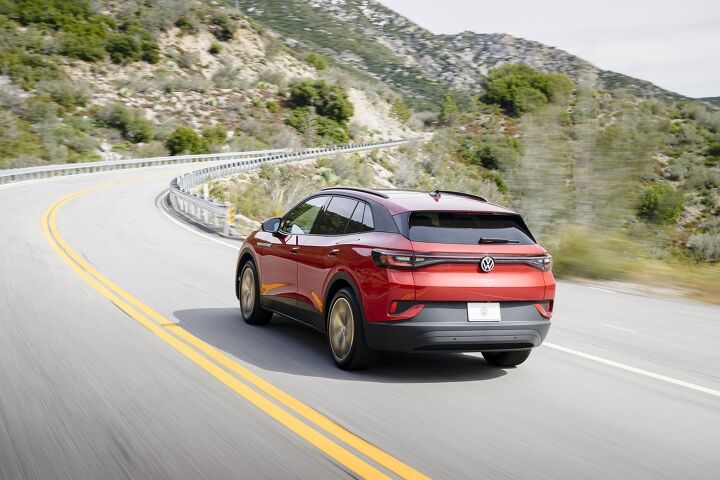
Next job: sketch attractive cars with a family look that projects quality once again — something lacking from the plasticky IDs.
Schäfer explains his design team, lead by Andreas Mindt, stuck to three principles: “stable, likeable, and secret sauce.”
Come again?
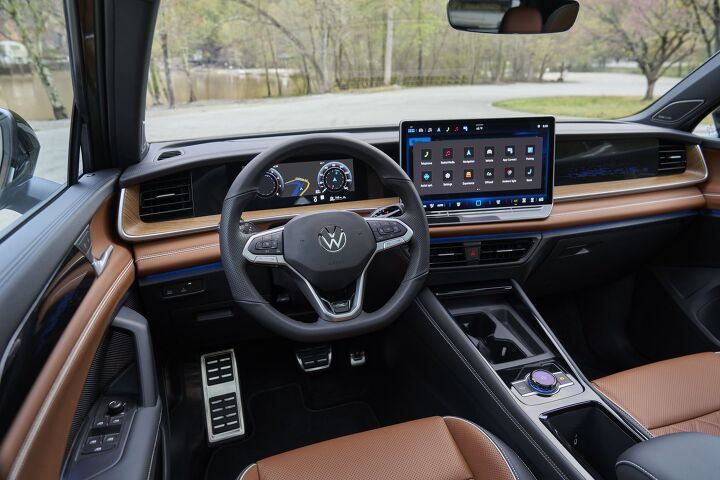
“A VW should have a friendly face. A door handle must be intuitive – easy to use when you arrive at the car with hands full of shopping. And we will bring back real buttons and real names, for cars you can understand immediately.”
When asked why touch controls became so prevalent in the first place, a fair amount of shade was thrown at VW’s previous leadership and an obsession with the industry chasing specific trends.
“There was a spirit of iPhone-ish kind of design and utilisation that you could see coming through in many companies,” Schäfer said. “It was a little bit difficult to get the designers off that idea.
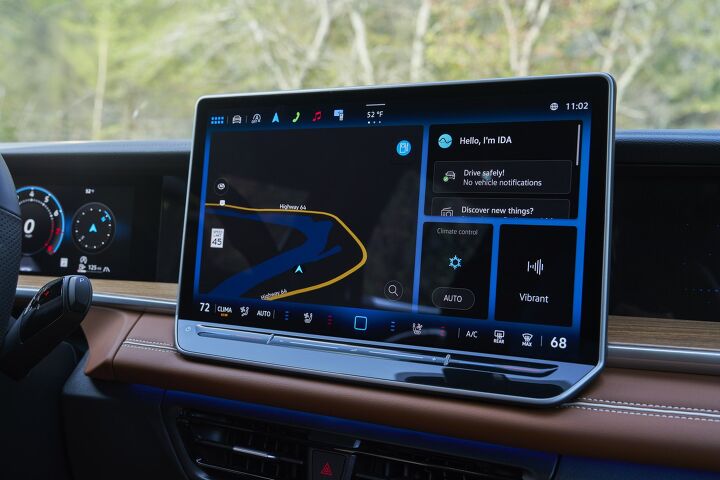
“I said, ‘listen, there’s two things that are absolutely non-negotiable for me: door handles and buttons’. I don’t understand why anybody would have [touch-sensitive] sliders.”
Volkswagen’s technical development boss Kai Grünitz likewise spoke with TopGear and was perhaps even more blunt about the situation, offering some harsh criticism of VW leadership under ex-CEO Herbert Diess.
“I’ve worked for Volkswagen for roughly 30 years now. Every Volkswagen has been made for the board, and especially for the CEO. Luckily Piech and [Martin] Winterkorn had a feeling for what the customer wanted,” he said.
“Changing the CEO means that everyone follows the new one. And if he says, ‘hey, we need sliders…’ they argued a little bit, but they’d style [it].”
Boards are always culpable, since they have the final say. While CEOs can likewise impact the trajectory of a business, they’re expendable and often make a nice scapegoat when share prices or production volumes begin to fall.
The industry has been offering up a lot of excuses in an effort to explain why people are so unhappy with today’s cars of late and most of them have been less than satisfactory. Frankly, looking back at the horrors the public was forced to endure from 2020-2022 now makes them seem like little more than a convenient excuse to make customers settle for less.
While bottlenecked supply chains and semiconductor shortages were no doubt legitimate, they dragged on to a point where the automakers really should have learned some kind of lesson about localization. Instead, companies pivoted even further into digitized, minimalist interiors while trying to frame it as luxurious or necessary due to ongoing supply chain constraints.
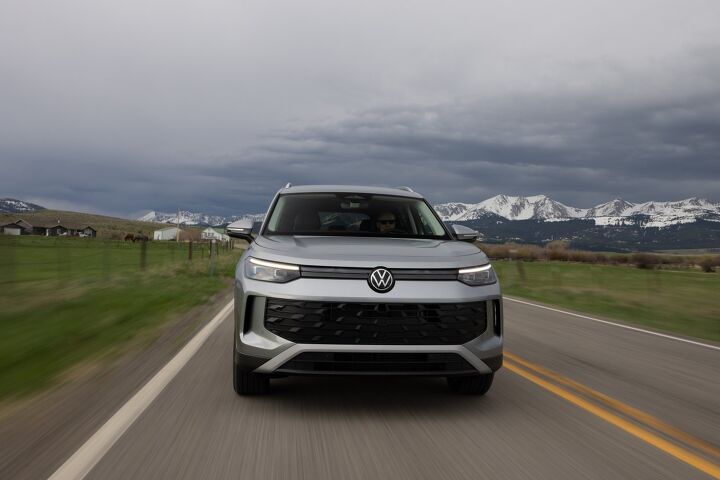
When customers stopped buying into the premise that distracting and unintuitive touch controls were somehow a premium feature, companies slowly began to admit that they were actually a cost-cutting measure. However, drivers were also noticing that digitized controls weren’t actually making vehicles any cheaper to purchase and paved the way for making formerly standard equipment available exclusively via monthly subscriptions.
But this is exactly what automakers always wanted. Anyone who followed the industry ten years ago knows that executives couldn’t stop talking about “mobility.” Designed to evoke a sense of progress, the term is actually just a euphemism for subscriptions, data harvesting, and taking control away from drivers via connectivity. CEOs made outlandish claims that all vehicles would be electrified, capable of driving themselves, and permanently connected to the internet by 2025. However, it was always framed as something that would usher in better, more sustainable automobiles.
Despite being heavily subsidized, all-electric vehicles failed to supplant combustion models. Self-driving automobiles also fell short of industry projections. While neither delivered the promised levels of success, both have managed to stick around and have enjoyed steady technological progress. But the industry does seem to have achieved its connectivity goals — likely to the chagrin of drivers everywhere.
One of the most persistent gripes from today’s motorists is that they broadly dislike modern vehicle controls. Studies have shown that they’re distracting and inherently less safe than the buttons, switches, and knobs that preceded them. We have statistical data showing that customers find them tedious and anecdotal data where their inclusion can spoil an otherwise excellent driving experience.
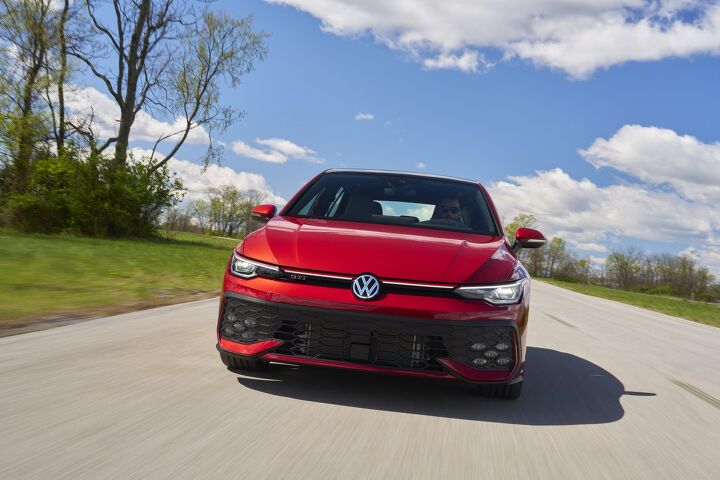
We need to look no further than the Volkswagen GTI (pictured) for the perfect example. Despite historically being praised as the perfect mix of practicality and performance, the Mk8 took endless criticism for being so reliant on touch controls and haptic-feedback “buttons.” The interior effectively spoiled what was an otherwise excellent car.
Responding to the negative feedback, VW updated the infotainment screen and began bringing back physical buttons on the steering wheel as part of the GTI’s 2025 refresh. While these were welcome improvements, more needed to be done.
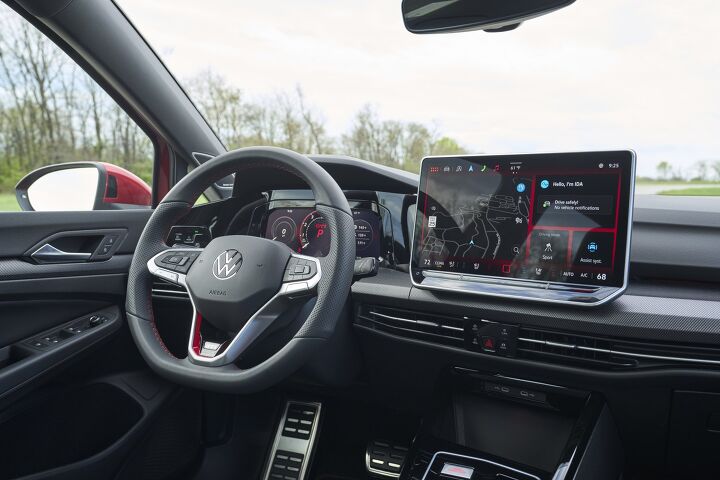
Volkswagen stopped hinting and formally acknowledged that pivoting away from traditional controls had likely impacted sales by 2026. At the start of the year, the company even announced it wanted to bring back a complete lineup of physical switchgear on all models — starting with the European ID.Polo.
The resulting hardware frankly looked like an afterthought, tacked on in desperation. But it was still an improvement and was being done to an electrified model, which is about the last place we’d expect to see any automaker push for physical controls. The demographic that purchases EVs also tends to be the group that’s the least offended by touchscreens. VW must have really been worried.
But Volkswagen is hardly the only brand that’s learning these lessons. Surveys continue to indicate that consumers have grown increasingly dissatisfied with modern automobiles. While plenty of that has to do with subpar reliability and how unserviceable they happen to be, frustrations with unreliable technology and needlessly complex infotainment systems are just as relevant.
The smart brands that don’t want their images permanently tainted are attempting to move back toward more traditional designs. But many continue to believe that the potential revenue streams afforded by connectivity features and touch controls are simply too sizable to ignore. Last year, Mercedes-Benz confessed that large screens were luxurious in themselves, noting it had gotten pushback from clients. However, the brand claimed that the lesson it learned was to keep the screens and give them better software in the hope that it would make them more appealing to luxury buyers. Since then, it has stated that it plans on putting at least a few buttons back into vehicles.
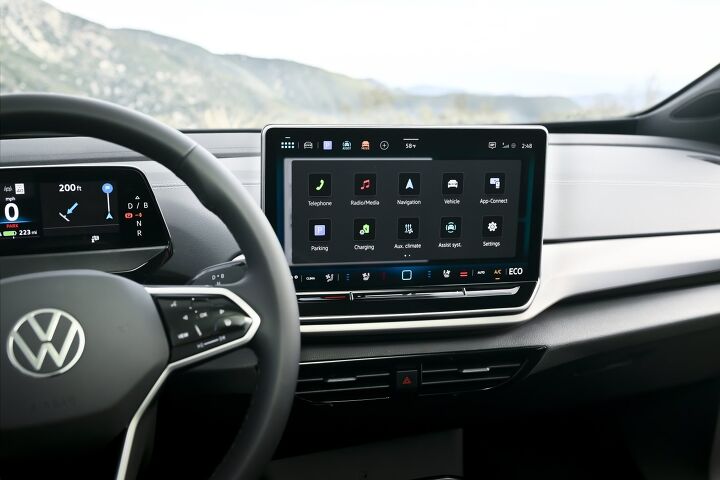
Volkswagen, a company whose very existence was originally predicated upon delivering affordable and practical vehicles to the masses, wisely looks to be taking a different approach. However, based upon some of the latest statements made by the CEO, VW will continue leveraging technologies many of us still find totally unacceptable.
“We are doing customer clinics a lot, asking ‘what do we need a button for?’ We are testing with data, using cameras inside the car to see what the customer uses and where they are looking,” noted Schäfer.
Listening to your customers is a good idea. But we’re not sure how many are clamoring for in-cabin cameras that report every eye movement back to headquarters. We understand that going back to 90s-era tech with modern soundproofing isn’t realistic or something everyone even wants. But nobody sane wants to be monitored inside their vehicle. Drivers need more than companies walking back a few of their worst ideas while offering lip service. Customers want the same predictable, useful, and serviceable vehicles that they’ve had for decades, not to spend a fortune on products that are designed from the ground up to exploit whatever good will they have left.
[Images: Volkswagen Group]
Become a TTAC insider. Get the latest news, features, TTAC takes, and everything else that gets to the truth about cars first by subscribing to our newsletter.