
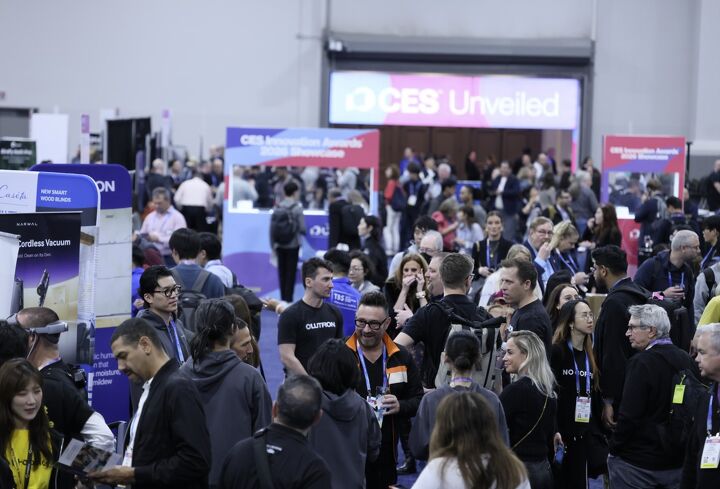
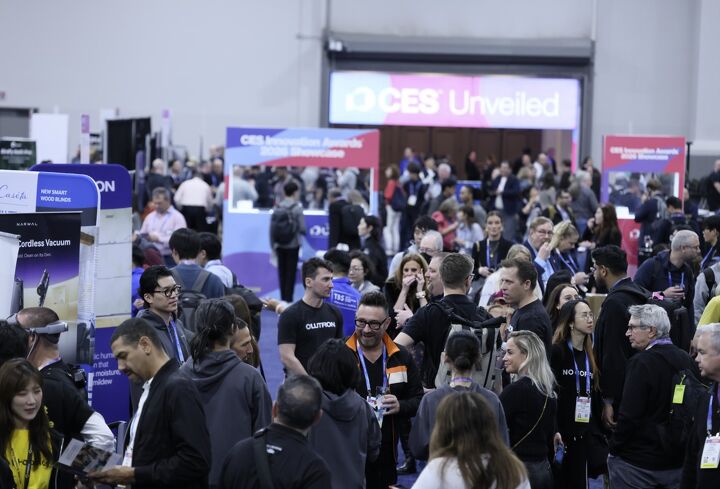
The 2026 Consumer Electronics Show (CES) has kicked off and the trade event remains a relevant venue for automakers. However, CES often serves as a dumping ground for fantastical ideas as much as it does a place to showcase the latest in legitimate technologies. This year seems to be a blend of the industry trying to market future vehicles as AI-enhanced driving robots and companies showcasing their new components — with a fair bit of overlap between the two.
Despite the automotive industry taking up more space at CES every single year, it often feels like the trade show isn’t actually for car people. Many motorists are starting to shun features that are designed to take control away from the driver. But that’s also what a large portion of the event is focused on promoting these days.
Granted, you’ll occasionally see a kiosk showcasing novel transmission designs or the latest tire technologies. But the overwhelming focus is presently on artificial intelligence and autonomous driving. That’s persisted for 2026, with many automotive brands suggesting that’s still their ultimate vision for the future.
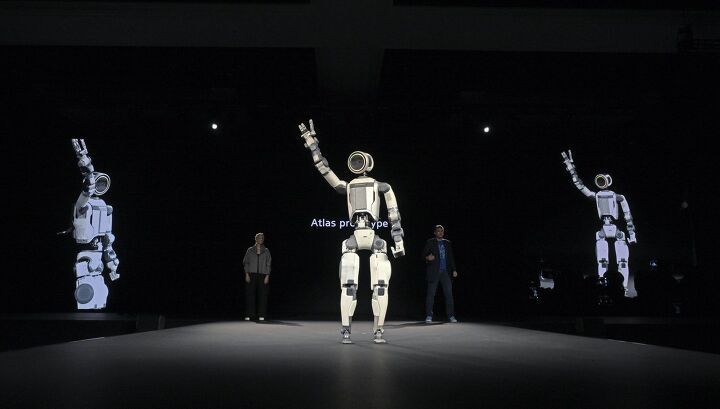
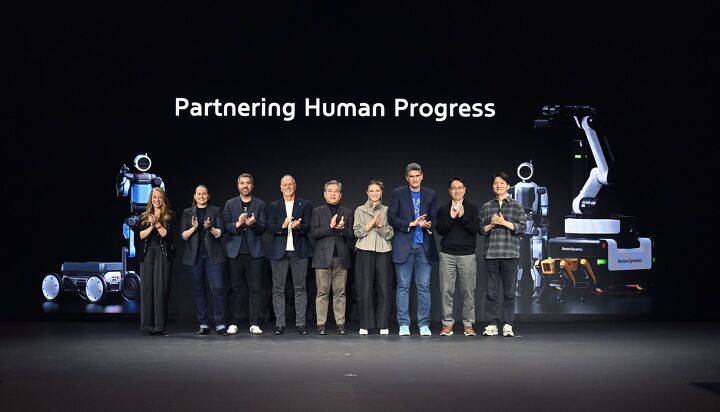
In a clear example of this, Hyundai once again stated that it basically sees itself becoming a robotics company as the years roll on. Korean automotive products will allegedly pivot toward being wheeled robots that use AI to “partner” with humanity. But this focus on robotics may simply be down to the fact that Hyundai purchased Boston Dynamics — which just seems like a business other companies buy to convince the world they’re on the cutting edge of robotics.
Hyundai envisions not only software-defined vehicles but “software-defined factories” and software-driven manufacturing models that will allow Atlas humanoid robots (pictured above) to build just about anything. It sounds a little fanciful, if we’re being honest, and a lot of it doesn’t seem like it has much to do with automobiles.
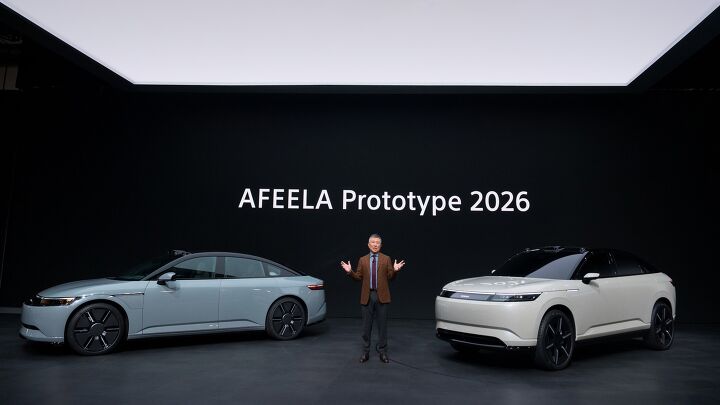
Sony Honda Mobility is attending CES 2026 to promote their collaborative Afeela vehicles (above). First appearing at CES 2020, the duo’s prototype car is supposed to be a premium EV that “pursues an interactive relationship between people and vehicles.” There’s a large emphasis placed on artificial intelligence and subscription services.
It’s basically a test bed to see how far the industry can lean into some of the more polarizing industry trends. Despite the Afeela 1 launch having been delayed until later in 2026, Sony Honda Mobility debuted a second model at CES this week. Expect for it to get its own article later this week.
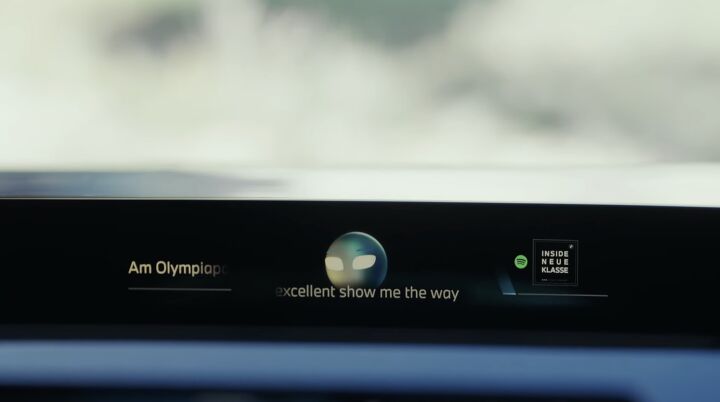
BMW and Mercedes-Benz will also be on hand showcasing how artificial intelligence has been integrated into their respective infotainment systems. BMW will be debuting Amazon Alexa Plus integration that’s scheduled to debut on the iX3 later this year. The goal is to provide an operating system that’s more conversational in nature, helping to replace physical controls while introducing new features.
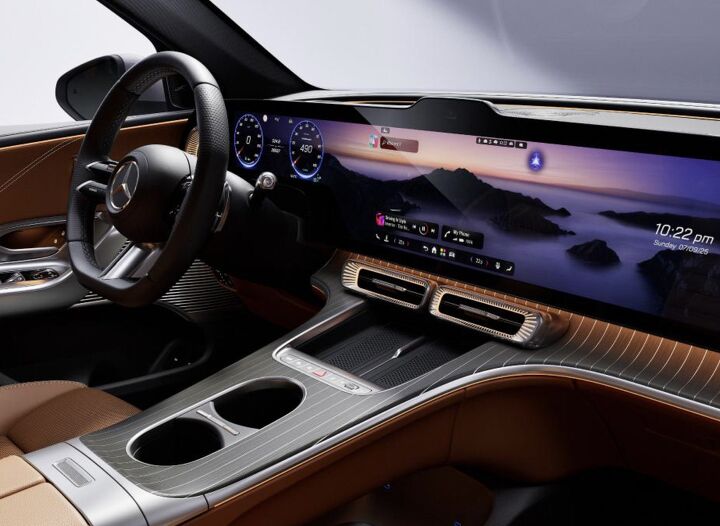
Mercedes has opted to send the all-electric GLC to CES in order to show off the dashboard spanning MBUX Hyperscreen. The infotainment system leverages AI sourced from Microsoft and Google. The updated Mercedes-Benz CLA will also be present to help promote the automaker’s latest self-driving technology — mainly as it pertains to urban roadways.
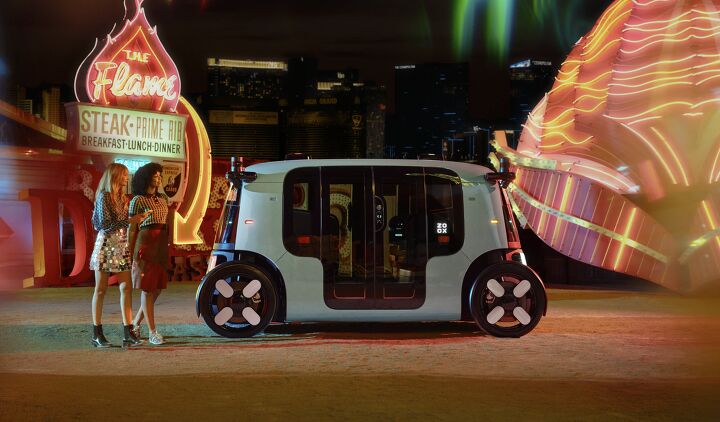
As CES takes place in Las Vegas, Amazon-supported Zoox robotaxis will be everywhere. The company will likewise be presenting on-site demos of its latest models, which includes 360-degrees of sensing equipment and no steering wheel.
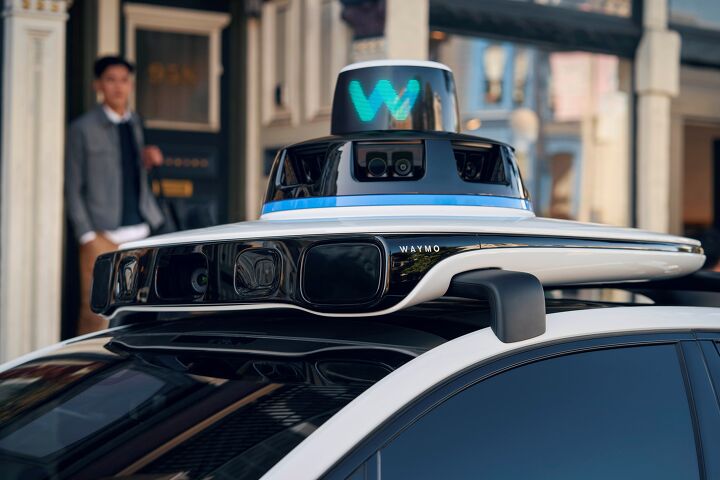
The same will be true of the Alphabet-backed Waymo, which garnered a run of bad publicity in 2025. A lot of this had to do with GM’s Cruise AV pulling out of the autonomous vehicle game. Without its largest rival now absent, a larger amount of scrutiny has been placed on the brand.
Similarly on hand are Uber and Nuro, which are showing off early versions of the Lucid Gravity SUV they’d like to use for robotaxis. You’ll recall that Uber’s previous attempt at fielding self-driving vehicles came to an abrupt hiatus after a pedestrian was struck and killed. Well, Uber now claims that it’s back in action and will be offering robotaxi services by the end of this year.
Autonomous driving, which remains a core focus of CES 2026, also isn’t getting the kind of love from people who exist outside of the tech sphere. Normal folks have always been a little skeptical and, following a string of reassuring years, public trust seems to be dwindling.
One of the concerns with autonomous driving is that the pace of progress has very clearly slowed down. While the concept had been around for decades, often being promoted by the industry itself as the future of automobiles as new features were implemented, the very first “self-driving vehicles” didn’t appear until the 1980s. Prior to that, everything was either radio controlled or used programmable guidance to simulate a vehicle that could drive itself.
Some of the earliest successes came by way of the U.S. Defense Advanced Research Projects Agency (DARPA) and Carnegie Mellon’s Navlab. Japan’s Tsukuba Mechanical Engineering Laboratory also produced an early prototype that relied on cameras that allowed a car to follow specific roadway markings.
Meanwhile, Ernst Dickmanns’ made waves in Germany when his collaboration with Daimler-Benz and Bundeswehr Universität München yielded autonomous test vehicles that could function at normal driving speeds. This led to other European-based autonomous research programs, like the massive Eureka-Prometheus Project.
But it wasn’t until fairly recently that we’ve seen self-driving vehicles offering the kind of adaptability that made it possible for them to filter in with regular traffic. While universities and governments have continued their autonomous research efforts, automakers and technology firms have enjoyed the most public success over the last fifteen years.
Widespread mapping, combined with improved sensors, cameras and algorithmic learning, yielded self-driving demonstrations that were staggeringly impressive in the 2010s. At the same time, technological advancements paved the way for “Advanced Driver Assistance Systems” (ADAS) that stopped short of true self-driving — many of which are now standard features on modern cars.
Unfortunately, the public has grown less enamored as progress has slowed down and shortcomings have manifested. The public failures of robotaxis are casting a long shadow on the industry’s self-driving aspirations, especially as many companies have opted to abandon the space since 2022. At the same time, owners of vehicles with advanced driving features know that they still don’t always cooperate.
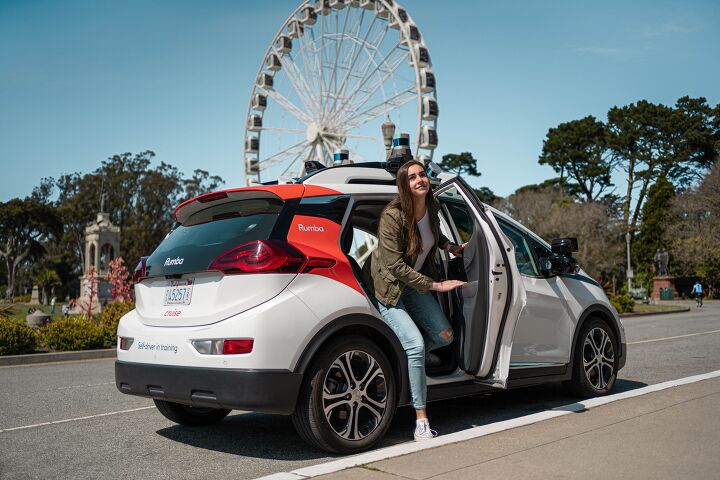
Individuals encountering inclement weather or poor visibility sometimes experience this first hand. If a sensor is too dirty to function properly — or cannot effectively peer through rain, fog, and snow — the relevant systems are no longer fully functional. This normally involves the vehicle deciding to make those features inoperable, notifying the driver in the process. However, there are instances where they simply fail, potentially exposing motorists and pedestrians to unnecessary danger.
But these are problems to be solved, with plenty of companies using CES 2026 to debut new components designed to outclass what came before. Here are a couple of the more interesting (less overtly exciting) entrants fielding genuine equipment this year — rather than focusing entirely on hype.
Teradar is claiming that its new sensing equipment is fit for that purpose. The company claims that its Summit sensor is “the industry’s first long-range, high-resolution sensor designed for high performance in any type of weather, filling a critical gap left by legacy radar and lidar sensors.”
The hardware is allegedly good enough to offer enhanced data to on-board computers, allowing for improved advanced driving features and SAE Level 3-5 vehicular autonomy. For those who don’t know, Level 5 is supposed to be true, full-time self-driving where a car can navigate through any condition without driver intervention.
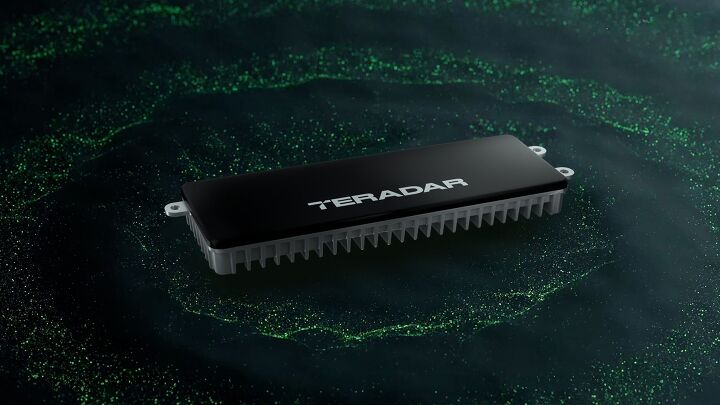
From Taradar:
Terahertz (THz) waves, which lie between radar and lidar on the electromagnetic spectrum, have always held great promise for sensing applications due to the unique characteristics of the wavelength, which allows both high-resolution and all-weather penetration. Previously constrained by available technologies, this new category of sensing is now viable following Teradar’s breakthrough in THz chip design.
The company’s Modular Terahertz Engine (MTE) is an all-solid-state sensor platform built on proprietary transmit (TX), receive (RX), and core processing chips, which deliver crystal-clear vision, detect small objects at great distances, and maintain uncompromised reliability in any environment – day or night, in rain, fog and snow.
Taradar’s claim that the sensor could peer through basically any weather condition is undoubtedly impressive. But it’s admittedly one we’ve heard before from other companies. That’s not to suggest the Taradar Summit is anything less than the manufacturer says. But all the hype surrounding self-driving vehicles has made us more than a little skeptical whenever fresh promises are being made.
Obligatory vows were also issued about how the hardware was going to save countless lives — something the industry always seems to bring up whenever it’s plugging self-driving tech.
“As extreme weather makes low-visibility crashes more common and more deadly, the need for reliable all-condition automotive vision has never been more urgent,” said Matt Carey, CEO and Co-Founder of Teradar. “By delivering visibility through fog, rain, snow, and sun glare, Teradar’s terahertz sensors could help prevent up to roughly 150,000 road deaths every year worldwide. We’re opening a sensing domain that simply hasn’t existed in automotive before, giving vehicles the ability to see in conditions where today’s systems break down.”
While the company officially came into existence in November, it says that it’s the result of industry experts from MIT and Stanford joining forces with experience in automotive engineering, advanced chip design, electromagnetics, photonics, and systems engineering. We’ll have to see what they yield and how the Teradar Summit stacks up against what’s presently available.
In a similar vein, Teledyne FLIR OEM has used CES to announce its new thermal camera intended specifically for automotive applications. As a subsidiary of Teledyne Technologies, the unit is presenting the public with the Tura thermal longwave infrared (LWIR) camera system.
The cameras are said to be designed to offer infrared capabilities that could assist preexisting advanced driving systems, specifically aiding with the identification of “pedestrians, animals, and other vulnerable roadway users.”
Other applications could be leveraging the ISO 26262 functional safety (FuSa) standard compliant cameras’ 640×512 resolution to create thermal overalls that provide thermal night vision for drivers.
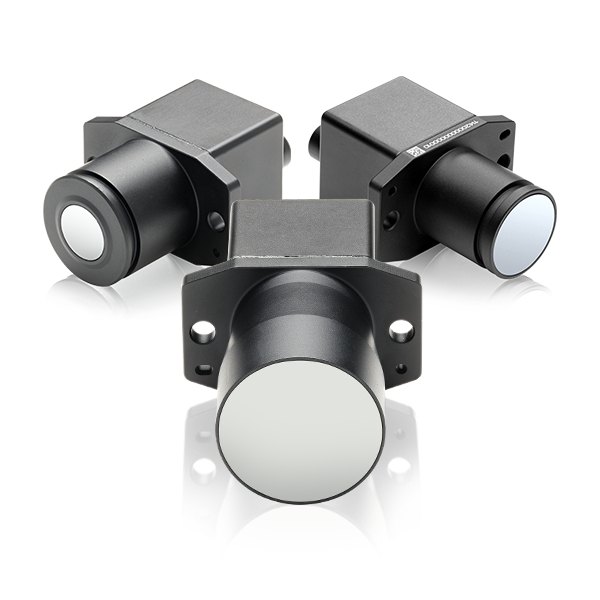
However, as handy as thermal vision can be, it comes with some limitations. As it can only recognize heat signatures — which can be masked through thermal barriers. This means that extra-thick fog, heavy rain, or dense snowfall may still present problems.
Teledyne sees the most likely application for the Tura FLIR camera being pedestrian detection, specifically as it’s connected to automatic emergency braking (AEB) systems that are supposed to become mandatory on all new vehicles after 2029. The company says its system should improve the subpar performance of modern alternatives, many of which really struggle to perform well in low-light conditions.
The Tura is said to support the U.S. Department of Transportation’s National Highway Traffic Safety Administration (NHTSA) Federal Motor Vehicle Safety Standard (FMVSS) No. 127 — specifically to exceed present AEB systems lackluster night performance.
“Safety and reliability are non-negotiable pillars of autonomous technology, and Tura sets a new industry benchmark with compatible FuSa features starting from the sensor,” stated Paul Clayton, President and GM, Teledyne FLIR OEM. “We have manufactured more than one million automotive thermal camera modules over the last twenty years for driver warning systems and will continue to provide a high-volume, cost-effective solution.”
None of that’s as glamorous as Hyundai promising to build an army of robots or companies debuting rival robotaxi fleets. But it does feel slightly more grounded.
[Images: Consumer Technology Association; Hyundai; Sony Honda Mobility; BMW; Mercedes-Benz; Zoox; Waymo; General Motors; Teradar; Teledyne Technologies; Hyundai]
Become a TTAC insider. Get the latest news, features, TTAC takes, and everything else that gets to the truth about cars first by subscribing to our newsletter.
